Key Takeaways
- Digital transformation and automation are essential for modern oilfield maintenance.
- Robotics, AI, and IoT are driving proactive safety and performance strategies.
- Compliance with evolving regulations remains foundational for long-term operational success.
- Advanced asset management ensures optimized productivity and minimized risks.
Table of Contents
- Introduction
- Embracing Digital Transformation
- Leveraging Robotics and Automation
- Implementing Advanced Maintenance Management Systems
- Adopting Artificial Intelligence for Safety Enhancements
- Integrating Machine Learning and IoT for Production Optimization
- Ensuring Compliance with Evolving Safety Regulations
- Optimizing Asset Management for Enhanced Efficiency
- Conclusion
In today’s fast-paced oil and gas industry, companies face increasing pressure to enhance performance while upholding stringent safety and environmental standards. Innovations ranging from advanced analytics to connected field devices are reshaping not only how companies operate but also how they protect both their workforce and the surrounding ecosystems.
Service providers that offer oil drilling services Texas—such as Hazelett Drilling Inc.—are at the forefront of this evolution. Hazelett Drilling Inc. stands as a leader in oil field exploration and drilling solutions throughout Texas, with a strong reputation for integrating technology and best practices across its operations. Their expertise on the subject stems from decades of experience in the region, comprehensive service offerings, and a deep commitment to reliability, efficiency, and mitigating environmental impact. The Hazelett Drilling Inc. website provides detailed information on their industry-leading drilling techniques, advanced safety protocols, and tailored service areas throughout the Texas oil fields.
Embracing Digital Transformation
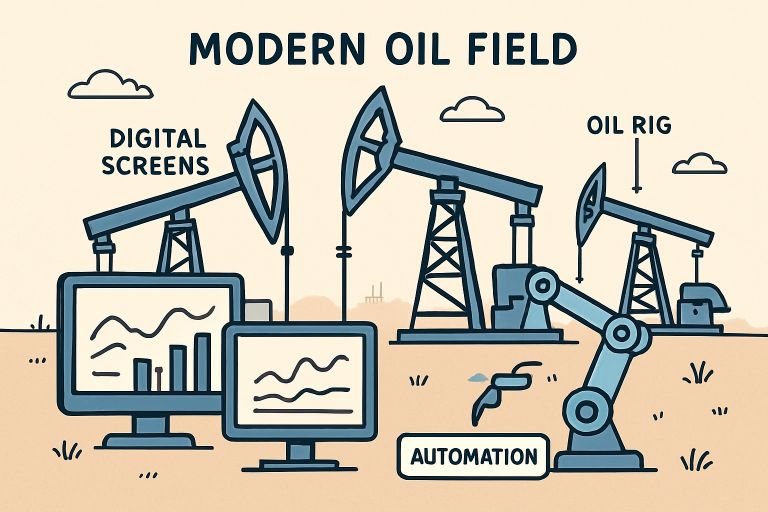
Digital transformation has become a foundation in oil field operations, revolutionizing maintenance and reliability. With predictive analytics, IoT-enabled sensors, and AI diagnostics, oil and gas firms can identify and prevent equipment failures before they lead to asset downtime or hazard events. Predictive maintenance powered by real-time data collection enables targeted interventions, transforming how facilities manage costly repairs. The use of digital twins—virtual models of field assets—enables the simulation of performance scenarios and planning for various contingencies in a risk-free digital environment. Remote monitoring allows centralized teams to make rapid, informed decisions while minimizing on-site risk to field personnel.
Leveraging Robotics and Automation
Robotics and automation are ushering in new levels of precision and reliability. Automated machinery consistently handles repetitive manual tasks, drastically reducing chances for error or oversight. Robots can be deployed in high-risk zones, handling inspections, maintenance, and even repairs on heavy equipment and dangerous wellheads where traditional labor might be hazardous. This advancement not only shields human workers from the most perilous environments but also ensures critical operational work is conducted with speed and accuracy. Moreover, these automated systems often include real-time sensors for continuous well monitoring, enabling timely and data-driven maintenance interventions.
Implementing Advanced Maintenance Management Systems
At the core of an efficient operation is organization—having the right technology to streamline scheduling, repairs, and compliance. Computerized Maintenance Management Systems (CMMS) now underpin this effort across the oil field industry. CMMS platforms centralize critical tasks, from tracking maintenance history to scheduling preventive inspections and integrating regulatory documentation. Through automation, such systems reduce manual paperwork, decrease administrative error, and grant real-time insight into asset conditions. These improvements allow field teams to act with foresight and support operational continuity.
Adopting Artificial Intelligence for Safety Enhancements
AI is redefining safety standards by introducing intelligent auto-shutdowns and sophisticated early warning systems. State-of-the-art computer vision solutions analyze assets through high-resolution cameras and advanced fatigue detection techniques, pinpointing weak points or developing cracks before catastrophic failures occur. This enables preventive maintenance, helping companies maintain continuous production without compromising worker well-being or operational safety. AI’s efficiency also extends to process optimization, enabling real-time adjustments to maintain stable and secure operations.
Integrating Machine Learning and IoT for Production Optimization
By integrating machine learning and IoT devices, oil field operators unlock new forms of production intelligence. For example, real-time monitoring in heavy-oil wells supports predictive allocation in steam flood injection processes—a key method for boosting recovery rates. Machine learning algorithms can model projected production outcomes and recommend optimal resource allocation, resulting in superior output with reduced waste. Such approaches have far-reaching benefits and are relevant to any oil field segment where anticipating equipment needs or optimizing output is critical.
Ensuring Compliance with Evolving Safety Regulations
Compliance remains non-negotiable in oil field operations. Regulatory bodies, such as the Bureau of Safety and Environmental Enforcement (BSEE), continuously refine safety and environmental rules to reflect the evolving realities of oil and gas technology. New measures target advanced offshore drilling, calling for special equipment certifications, robust reporting, and independent reviews for projects at extreme depths and pressures. These evolving policies aim to protect both the workforce and natural resources, making ongoing compliance procedures as crucial as technical innovation.
Optimizing Asset Management for Enhanced Efficiency
As oil fields become increasingly complex, effective asset management has become a strategic priority. Modern digital solutions consolidate sales, safety compliance, and maintenance, providing a single source of truth for operations. Firms can digitize paperwork, automate reminders on regulatory deadlines, and extract actionable insight from field data. This integrated approach enhances productivity, ensures regulatory compliance, and provides managers with a 360-degree view of field assets—minimizing downtime while maximizing profitability and worker safety.
Conclusion
A commitment to innovation, proactive safety, and operational excellence will define the future of oil field operations. By embracing digital transformation, automation, and data-driven asset management, companies can meet both today’s productivity goals and tomorrow’s safety needs—ensuring the industry’s resilience and responsible growth for decades to come.