To us, the thoughts of oral health involve the images of toothbrushes, floss and dental checkups. However, one of the key components of oral health is a well-known component that is almost never spoken about- saliva. Saliva has a central role in oral homeostasis, digestion, and antipharyngeal protection of tooth and soft tissues even though it has a modest presence. The functions of saliva are important to understanding why any slight reduction of its flow would have serious health consequences.
The Composition of Saliva
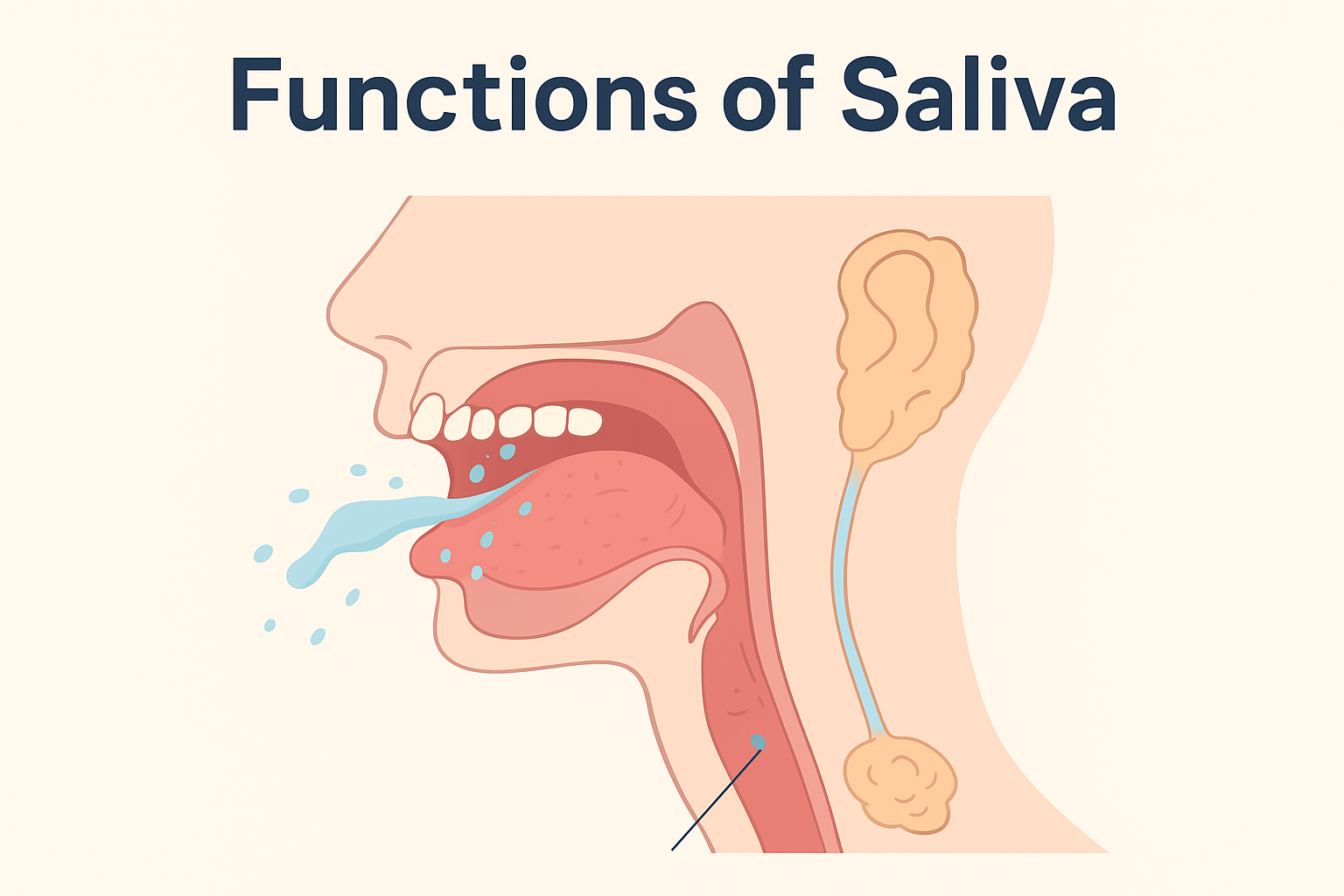
The saliva is a multi-functional fluid that is mainly secreted by 3 large groups of salivary glands; parotid, submandibular and sublingual glands. The fact that the salivary glands are minor and located at various points in the mouth mucosa also leads to its constant secretion. Though water forms approximately 99 percent of saliva, the other 1 percent is made up of electrolytes, enzymes, immunoglobulins, mucins and growth factors- each having different roles.
Sodium, potassium, calcium, and phosphate are some of the electrolytes that help to maintain pH in the mouth and to aid in enamel remineralization. Enzymes, such as amylase and lipase, initiate the breakdown of carbohydrates and fats, and start the digestion before food gets to the stomach. Glycoproteins known as mucins that make saliva viscous play the role of lubricating and coating the oral mucous membranes. The defense system based on immunoglobulins and primarily IgA is extremely important in terms of the neutralization of pathogens and the prevention of infections.
This complex structure causes saliva not to be just a lubricant but a very dynamic fluid which is important to oral health.
Physiological Salivary Functions
Saliva has a number of important roles that are put together to ensure that there is a fine balance in the oral mouth. These are lubrication, digestion, buffer, antimicrobial protection, and tissue repair.
Lubrication and Oral Comfort
The lubrication of saliva is one of the most easily recognizable works of this substance. The salivary mucins cover the teeth, gums, tongue and the soft tissues and minimize friction when speaking, chewing and swallowing food. Lack of proper saliva makes the mouth cavity dry, thereby leading to discomfort, burning, and difficulty in swallowing, which is medically referred to as xerostomia.
Lubrication also shields oral tissues against mechanical damages occasioned by hard food or dentures. Saliva promotes the stability of tissues and reduces chances of injury or inflammation by developing a thin protective layer.
Digestion: The First Step
The first medium of digestion in human beings is saliva. The salivary amylase enzyme is responsible for breaking down starch into maltose and lingual lipase initiates the process of breaking down lipids. Such an enzymatic activity does not only aid in the efficient digestion of food, but also increases the absorption of nutrients further in the gastrointestinal tract.
Also, one of the functions of saliva is to create a bolus- a unified mass of chewed food, which is also easier to swallow and pass down the esophagus. Eating may prove to be difficult especially to the aged or persons with certain medical conditions without sufficient salivary flow.
Buffering and pH Regulation
The mouth cavity is in constant exposure to food, drinks, and microbe metabolic acids. The presence of bicarbonate ions in saliva, as buffers, neutralizes such acids as dental enamel erosion is prevented. This buffer effect plays an important role in the prevention of dental caries, as well as preservation of the tooth integrity.
Calcium and phosphate ions are other saliva components that help in the enamel remineralization process which restores microscopic acid attacks. Therefore, saliva is a natural defense system, which maintains tooth structure and oral health.
Antimicrobial Protection
Saliva is an initial barrier against the pathogens in the mouth. It has immunoglobulins, lysozyme, lactoferrin and enzymes of peroxidase which prevent the growth of microbes. Secretory IgA helps stop the sticking of bacteria against the mucosal surfaces, whereas the lysozyme disintegrates the mucosal walls of bacteria. Lactoferrin absorbs iron, which is a vital nutrient to the growth of bacteria, effectively starving dangerous microorganisms.
Saliva helps to avoid infection as well as the risk of periodontal disease; it helps to maintain systemic health because the micro-flora in the mouth is balanced. Its antimicrobial effect emphasizes the reason why a reduced flow of saliva may cause frequent oral infections.
Tissue Repairs and Wound Healing.
There are epidermal growth factors (EGF) and additional bioactive molecules in saliva which facilitate tissue repair and regeneration. Small wounds or ulcers are the examples of minor injuries that are more effectively healed when exposed to saliva owing to its capacity to promote cell growth and movement. The role of saliva in preserving the integrity of mucosa of the mouth and decreasing the susceptibility to secondary infections is emphasized by this role.
Saliva and oral homeostasis
The oral cavity is a dynamic system that is continuously exposed to mechanical stresses, microbial infiltration, and chemical insults. Saliva contributes to underlining the oral homeostasis by controlling hydration of soft tissues and the pH, regulation of microorganism population and maintenance of tissue integrity. It provides a balance of destructive and protective factors in the oral cavity, which is necessary for good oral health.
Saliva contributes to the bacteriostasis of the oral cavity, aids in digestion and in taste perception by dissolving food components and carrying them to taste receptors. This action not only furthers the sensory benefits of food but may also influence consumption patterns that enhance nutrition, which has systemic implications.
Health Effects of Decreased Salivary Output
Xerostomia, also known as dry mouth, is the subjective feeling of dryness in the mouth due to decreased salivary secretion. The condition can be transient resulting from dehydration or adverse drug effects and stress or it can be permanent due to associated diseases like Sjögren’s syndrome and diabetes or following radiation therapy in the head and neck region.
Oral Health Consequences
Salivary hypofunction wreaks havoc in the oral cavity, causing:
- Dental Carie: Teeth are more prone to acid attacks and caries if they are not adequately buffered and remineralized.
- Periodontal Disease: Reduced antimicrobial protection may lead to increased plaque accumulation and gingival inflammation.
- Oral Infections: With less saliva, opportunistic pathogens — including Candida species — can grow, resulting in oral thrush.
- Swallowing and Speaking Difficulty: Dryness hinders lubrication, so speaking and swallowing are uncomfortable or painful.
- Taste alterations: Taste molecules need to be solubilized by the saliva, hence a lack of saliva can reduce taste perception and appetite.
Systemic Implications
However, xerostomia that develops as a result of systemic problems, has effects beyond the mouth. Inability to eat may cause nutritional deficits and persistent infections in the oral cavity may induce systemic inflammation which may exacerbate cardiovascular health or diabetes control. Hence, saliva is critical for maintenance of not only local oral homeostasis but also general well-being.
Factors Determining Saliva Secretion
Salivary flow is a physiological variable affected by multiple factors, including:
- Hydration Status Dehydration diminishes saliva production. 29
- Medications: Dry mouth can be a side effect of antihistamines, antidepressants and antihypertensives.
- Age: Decreased salivary gland function has been associated with aging and may be a factor in age related xerostomia.
- Disease: Autoimmune diseases, like Sjögren’s syndrome, have a direct impact on salivary glands.
- Radiation Therapy Risk of irreversible salivary gland damage associated with therapy for head and neck cancer.
“With Thought for Therapy:” Diagnosis and Treatment of Isotretinoin-Related Salivary Dysfunction and Understanding These Aspects Saliva dysfunction in not only the prevention but also the management Saliva – the river of life Saliva is not merely a river of life, but it is an essential nutrient of life.
Strategies to Promote Salivary Health
Optimal salivary flow is also important for maintaining good oral health. A few ways to maintain or increase the salivary production include:
- Hydration – Drinking enough water daily helps maintain a good flow of saliva.
- Stimulants to Mastication: Chewing stimulants such as chewing sugar-free gum or lozenges activate the salivary glands and facilitate natural moisturization.
- Nutrition: Don’t eat too many acidic or sweet foods that can tax saliva’s buffering system.
- Medication Checkup: If dry mouth is a side effect of a medication, talk to your doctors about possible alternatives or dosage adjustments.
- Oral Hygiene: Daily brushing and flossing along with antimicrobial rinses aid saliva in its protective efforts.
- Moisturizing Agents: For patients with long term xerostomia, saliva substitutes or moisturizing gels may be useful in providing symptomatic relief.
Conclusion
Saliva is not a simple digestive fluid but a complex mixture having a multitude of functions and is necessary for the maintenance of oral and general health. The many roles of saliva—as lubricant, digestive agent, buffering agent, antimicrobial agent and contributor to host defense and wound healing—make saliva an essential element of oral homeostasis. Knowledge of the significance of saliva helps to elaborate the severe effects of salivary hypofunction and to take anticipatory measures which aid in the sustenance of gland activity.
In acknowledging saliva’s unsung hero status, it becomes easier for us to recognize and appreciate all the subtle yet powerful functional contributions it make that mean so much to our daily comfort, oral care, and well-being. When we cherish and defend this critical fluid, the results to one’s smile and the quality of one’s life cannot help but be wondrous.