Introduction
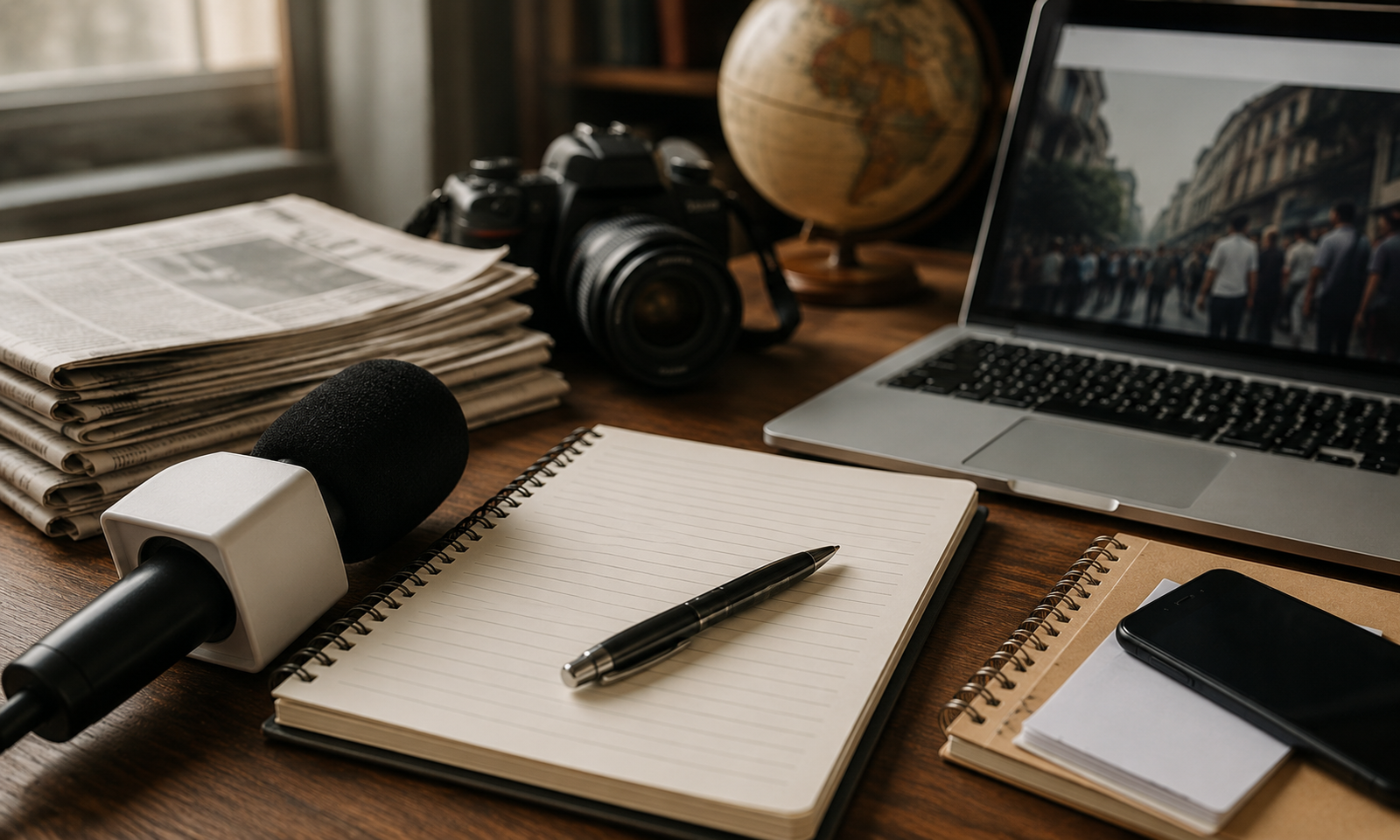
Social media has tremendously redefined the way that information is created, shared, and consumed over the last twenty years. Conventional media, including newspapers, television, and radio, used to dominate the communication flow in the world. Nevertheless, sites such as Facebook, X (previously Twitter), Instagram, and TikTok have made the dissemination of information democratic and everyone with an online connection can be a publisher and distributor of contents. This revolution is one of the profoundest changes in the history of mass communication.
What started as mere networking sites in which people socialized with each other have become effective means of mass communication, citizen journalism, and digital activism. However, in conjunction with these advantages, new obstacles have been faced, particularly misinformation, polarization in the Internet, and the formation of echo chambers that endanger the objective discussion of the population. To comprehend the role of communication in the 21st century, it is necessary to realize the transformative power, as well as the possible threats of this digital revolution.
The History of Mass Communication
In the past, mass communication was a top-down model that was linear. Information gatekeepers were media organizations, governments and corporations. The newspapers were used to release editorials; the television had its share of news and the viewers were mostly passive receivers.
This one-way system started to change with the advent of the internet in the late 20th century, and the maximum disruption came with the advent of social media in the early 2000s. People had the opportunity to post content to the world without intermediaries and in real-time,for the first time. Instead of spending money on a pricey printing press or a license to broadcast, it is now possible to do it through a smartphone.
Social media inverted the idea of mass communication. It decentralized power, diversified voices, and erased the distinction between producers and consumers of information. This new participatory culture was represented by the emergence of the prosumer, that is the producer/consumer of media.
Content Creation Democratization of Social Media
Individual empowerment is one of the most radical features of social media. Websites such as Facebook and Instagram have provided billions with the means to express their opinion, narrate stories, and reach previously unimaginable audiences.
An example of this is that now an independent journalist can break news on X in real time, bypassing traditional newsrooms. The creative Instagram reels or Tik ok videos will help a small business owner to create brand awareness. Hashtags allow ordinary citizens to attract attention about social causes to the worldwide community: consider such movements as #MeToo, #EndSARS, or BlackLivesMatter.
This communication democratization has led to inclusiveness and diversity in the common conversations. Once exploited or repressed by political, social, or economic restrictions, voices now have a medium on which to raise their voices. Social media has thus become more of an entertainment tool than a tool of empowerment and social justice.
International Effectiveness and Real-Time Interconnection
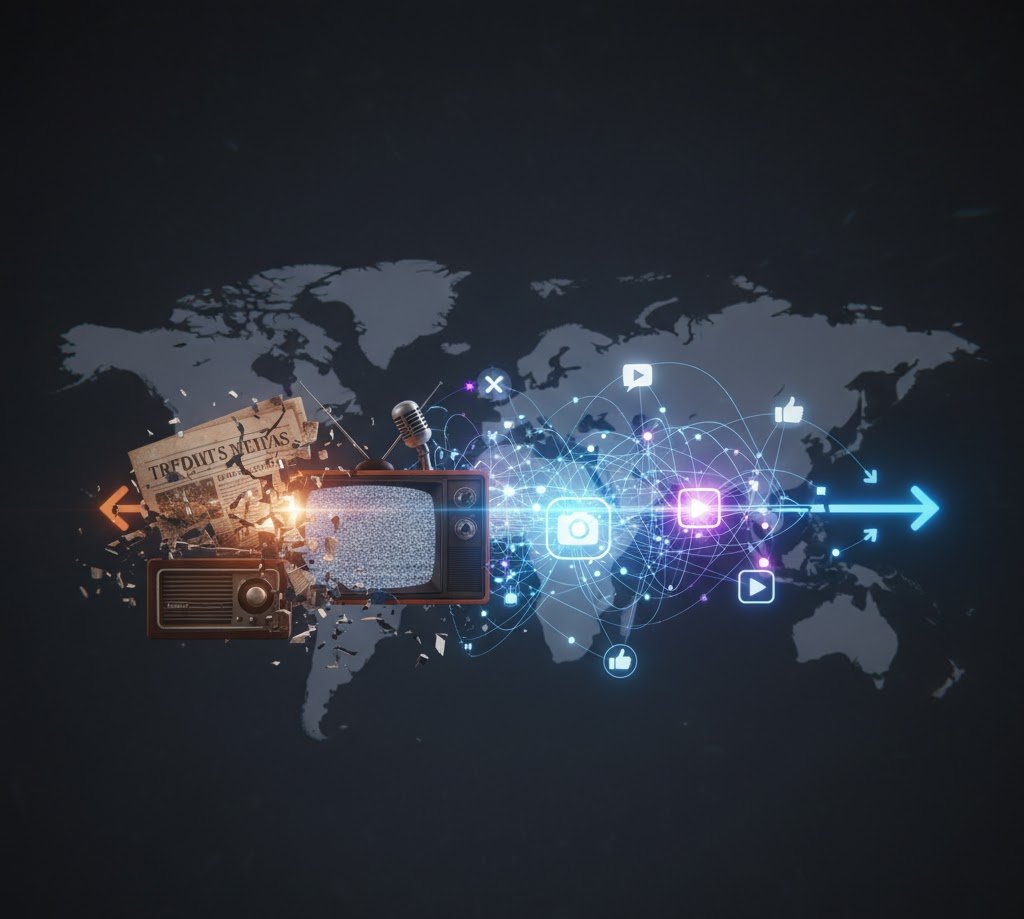
The strength of social media is immediate and global. A video, tweet or post can be viral in just a few seconds and be viewed by millions of people on different continents. This real-time form of communication has radically changed the pace and the extent of global communication.
This is a new avenue of access to audiences by journalists, activists and educators. News is breaking more than ever, and it is usually real-time information that is relayed by on-the-ground witnesses. In the case of natural disasters, political protests, or humanitarian crises, social media is a lifeline in communication, as well as a coordination tool.
As was the case during the 2020 COVID-19 pandemic, social networking platforms as Twitter and Facebook were instrumental in disseminating information about health, live data, and governmental information. Equally, social media contributed to organizing protests, awareness and mobilizing world support during the Arab Spring uprisings.
This immediacy would have been unthinkable in the era of print or broadcast media. The world has practically turned out to be a global village and has become connected with each other via digital media which breaks geographical boundaries.
Reorganization of Journalism and Flow of Information
Citizen Journalism and Live Reporting of Social Media
The emergence of social media has made journalism a profession that has become a participatory practice. Every person with a smartphone has the opportunity to capture breaking events, update in real time, and shape the general opinion. This has given rise to citizen journalism whereby people are the reporters without being institutionally affiliated.
Although this has widened the information access, it has also questioned the traditional standards of journalism. Sometimes speed and sensationalism replace verified facts and professional ethics. However, citizen reporting can still be priceless in the areas where press freedom is limited, and the problems that would not otherwise be revealed can be made public.
Recommendation Systems and Personalization
The other important change is in the distribution of content. Contrary to the old media that delivers the same message to everyone, social media platforms apply algorithms to customize the content feeds, depending on the user’s behavior. Such personalization makes it more entertaining yet also fragmented to consume the information.
Algorithms give more preference to the engagement-likes, shares and comments rather than accuracy. Because of this, emotional or controversial posts tend to be the most popular content in feeds, which increases extremes and supports confirmation biases. This paradigm shift has re-invented the meaning of digital age.
The Social Media as a Social Change Tool
In addition to personal communication, social media has now turned out to be a social, as well as political mobilization engine. Hashtags and viral challenges, as well as online petitions, are used by activists to create awareness and accountability.
An example is the #MeToo movement that crossed the boundaries and industries and provided victims of sexual harassment with a common voice. In a like manner, the EndSARS movement in Nigeria demonstrated how digital activism might be used to oppose systemic injustice and generate international support.
The ability of social media to coordinate protests, unite opinions, and coerce institutions can show that it can be used as a reform catalyst. Governments, corporations, and media houses have begun to taboo online discussions with the knowledge that a multitude of people would change their mood in just a single night.
Brand Communication and Consumer Engagement
Social media has restructured marketing and PR in the business world. Instagram, TikTok and X are now the platforms through which the companies can engage the consumers directly, manage the reputation, and create the brand loyalty.
Interactive elements (polls, live streams, comments, etc.) will promote two-way communication, which is an improvement of the one-way advertising paradigm. The outcome is a more participatory and interactive type of brand storytelling, which is reflective of the participative essence of social media itself.
Problems of Digital Communication Era
The Menace of Misinformation in Social Media
Social media, viewed as an open architecture, has its positive sides, but it is also prone to rapid communication of misinformation and fake news due to its open nature. False information, photoshopped pictures, and fake videos may spread quickly than facts and affect the opinion of masses and even the election results.
Social media platforms are mostly dependent on user-generated content as opposed to the formal checks which are found in traditional media. This has enabled the flourishing of conspiracy theories, propaganda, and disinformation programs, particularly at times of crisis or during time of political campaign.
Both the 2016 U.S. presidential election and the COVID-19 pandemic demonstrated the importance of misinformation as something that distorts democratic procedures and threatens the health of the population. The dilemma of the future of mass communication is to strike a balance between the freedom of expression and the ways of maintaining truth and responsibility.
Echo Chambers and Polarization
The other acute problem is the creation of echo chambers, online spaces where the users are mostly shown information that supports their already held assumptions. This is because algorithms promote engaging with content that is similar to what users have already interacted with, and this gradually eliminates views that are different.
Echo chambers enhance the ideological differences and decrease the exposure to a variety of ideologies. Consequently, there is increased polarization of social discourse as individuals become less willing to engage in positive discourse. The disintegration of common reality endangers social integrity to make informed citizens and to engage in democratic discourse.
Ethical Concerns and Privacy
The process of targeted advertising and algorithmic curation with the help of collecting user data is deeply questionable in terms of ethics. Lots of users do not know how their personal data is being collected and processed in order to influence online actions.
In addition, privacy, mental health, and personal security are threatened by the persistent surveillance and the digital trail left behind on these platforms. With the ever-increasing social media corporations, the demand to govern and uncover the realities is becoming louder globally.
Finding the Way Ahead: Solutions and Accountabilities
Both Media Literacy and Critical Thinking in Social Media Contents
Media literacy is one of the advocated reactions to misinformation and echo chambers. People will have to be trained to judge the sources, fact-check, and spot bias. Governments and learning institutions can have critical roles to play in integrating digital literacy programs in the curriculum so as to make more critical media consumers.
Platform responsibility and Control
Social media platforms should take more responsibility for content moderation and transparency. Algorithms must focus on valid sources and exposure to information diversity, but not to maximized involvement. The negative effects of misinformation can be reduced by cooperating with independent fact-checkers and adhering to ethical communication standards.
The Resurgence of the Role of Traditional Journalism
Professional journalism is still necessary even in the era of social media. Fact reporting, editorial supervision, and investigations are countermeasures to noise in online communication. The gap between professional credibility and digital reach can be overcome by implementing hybrid models, when traditional media will be distributed via social platforms.
Conclusion: Final Words on the Impact of Social Media
The emergence of social media is a historical epoch in the history of human communication. Social media such as Facebook, X, Instagram, and TikTok have transformed the face of mass communication by removing barriers, giving different voices a stronger voice, and providing the response that people anywhere in the world can respond to in real time. They have changed the way we tell stories, mobilize and the way we get information.
But with this democratization, there are also many complicated issues such as misinformation, polarization and ethical issues that need to be addressed collectively by being aware and responsible in governance. Due to the continuous advancement in technology, the future of communication will not rely merely on innovation, but integrity, literacy, and inclusiveness are also likely to play a role.
After all, the real effects that social media will have will be determined not by how much it conveys, but rather on the quality, credibility and unity that it may bring about in an ever-growing connected world as discussed.