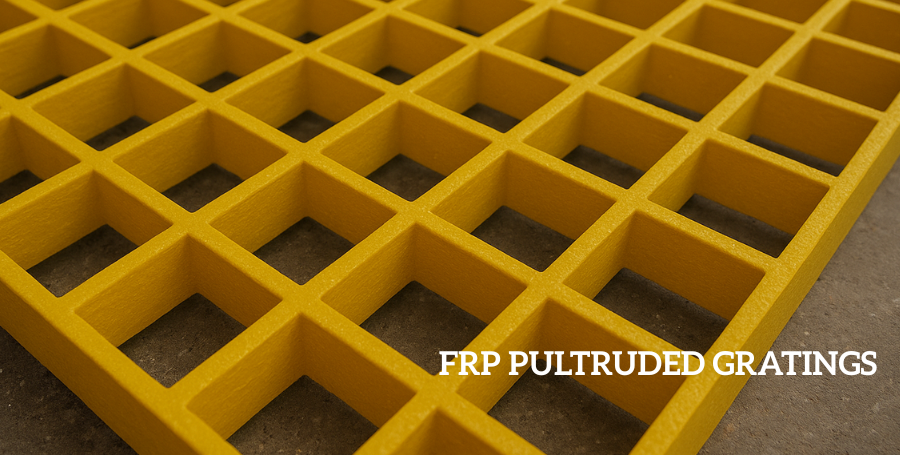
FRP pultruded gratings are panels of high strength and resistance to corrosion made from Fiber Reinforced Plastic. They are widely used in industrial floors, chemical plants, offshore platforms, and walkways. Built to survive harsh environments, these gratings provide excellent durability, non-slip surfaces, and very low care compared to the traditional steel option.
Nevertheless, even the most complex FRP pultruded gratings can perform poorly if they are not installed properly. Correct installation secure long-term safety, structural stability, and the best possible load-bearing performance. This installation checklist is a detailed guide for engineers, contractors, and facility managers to achieve efficient, accurate, and error-free FRP grating installation for lasting reliability and performance.
Why Choose FRP Pultruded Gratings?
In the production and construction industry, FRP pultruded gratings have offered a non-metallic solution that has been well accepted and appreciated by users on almost every occasion. Metal options, on the other hand, may corrode, develop rust, or require ongoing maintenance. However, FRP gratings have excellent and long-lasting performance even in harsh places like marine platforms, wastewater plants, and chemical industries.
Here are some of the reasons that professionals prefer using FRP pultruded gratings:
High strength-to-weight ratio: This feature gives the product a good load-bearing capacity while at the same time being light and easy to handle.
Corrosion and chemical resistance: This property allows the use of the grating in highly corrosive or humid environments where the steel would have a short lifetime.
Easy installation: The lightweight design enables the setup to be done quickly and safely without heavy machinery.
Low maintenance: It means that only cleaning may be needed at most, and no repainting or anti-rust treatment is required.
Long life cycle: The grating gives the customer a combination of excellent durability and performance over the years, which in turn shrinks the cost of replacements.
Quick Comparison:
FRP pultruded gratings are lightweight but still strong; they resist corrosion where steel would get rusty, and they do not need any care for years. Unlike aluminum, which may oxidize and lose strength in chemical exposure. These features turn FRP grating installation into a wise, long-term investment for industrial safety and efficiency.
Pre-Installation Formulation
It is very important to get thoroughly prepared before the actual installation of FRP pultruded gratings, as this will lead to a setup that is smooth, safe, and accurate. The checks that are very well and properly done at the time of pre-installation will not only be a preventive measure against structural issues but also confirm that the gratings are performing up to their maximum potential. Take a start by going through all the technical details, site conditions, and materials to be sure that the installation process of FRP grating is successful.
Checklist Includes:
Verify design drawings and load specifications. Make sure that the grating type and dimensions correspond to the structural design and meet the expected load requirements.
Inspect gratings for any damage during transport-Look for cracks, chips, or any such defects that might weaken the structure.
Confirm site measurements and layout accuracy – Check that the measurements are in accordance with the grating plot and the locations of support.
Ensure structural supports are level and corrosion-free – For the durability of the installations, the base must be stable and even.
Gather installation tools – Have clamps, cutting tools, fasteners, PPE, and measuring tape ready before starting the work.
Store gratings on a flat, dry surface until installation
Protect the panels from warping or moisture absorption by storing them correctly.
Proper preparation is the key to getting a secure, efficient, and permanent installation of FRP pultruded gratings for industrial platforms or walkways.
Step-by-Step Installation Checklist
The initiation of FRP pultruded gratings plays an important role in keeping the structures reliable and long-lasting. Hence, it must be done with precision and the use of safety standards. Make use of these instructions to the letter for a successful FRP grating installation on platforms, walkways, or for industrial flooring applications.
Step 1: Disposition and Design
Start with precise center-to-center alignment as per the design layout.
Grating panels should have a clearance gap of approximately 6 mm between them for the purpose of thermal expansion and proper drainage.
Orientation of gratings should be checked to ensure that the load-bearing bars are in the right direction.
Step 2: Modern Finishing
Razors with diamond-tipped or carbide saw blades are recommended for cutting that is smooth and precise.
All sides that were exposed after cutting should be sealed with resin so that there will be no moisture penetration, and the structural integrity of the grating will be maintained.
Cutting must be done in a well-ventilated place, and the workers should always wear the required protective equipment.
Step 3: Securing and Fixing
The use of clamps or clips made of stainless steel that resist corrosion will make gratings stable and thus can be properly fitted.
Depending on application requirements, the common clip types are M-type saddle clips, L-clips, and W-clips.
In the course of fastening, do it uniformly in order to avoid distortion or warping of the panel, thus making the installation process smooth.
Step 4: Support and structure
Proper load allocation requires each grating panel to have a minimum bearing surface of 40 mm on each side.
Check that the supporting structure is designed for the load capacity, is level, stable, and free from corrosion.
For increased strength and durability, use framing systems designed specifically for FRP pultruded gratings and ensure they meet the required load and safety standards.
Step 5: Safety & Checking
Perform a walk-over test to make sure that the gratings are fixed securely and are also stable.
Before giving the installation a thumbs up, look for loose clamps, uneven panels, or movements, and make a double-check.
To make sure that the alignment is right and that all the joints and fasteners are tightened according to the manufacturer’s instructions, carry out a review.
Example:
The chemical plant walkway is a prime example where good alignment and proper drainage spacing not only eliminate the risk of water and chemicals accumulation but also ensure employee safety and the long life of FRP pultruded gratings.
Common Installation Flaws to Avoid
In the course of the installation of the FRP pultruded grating, the following mistakes that are frequently made should be avoided to get the best performance and longest life out of the product:
Not supporting the edges properly or having them too far off – Make sure to give a bearing surface that is adequate for each panel to keep the grating from sagging or getting damaged.
Not using the right fasteners or not following the right spacing – Only use the recommended FRP grating clips and clamps with proper spacing to ensure the stability of the structure.
Not applying resin sealing on cut edges – Edges that are not sealed may allow moisture to penetrate, thus making the FRP pultruded gratings weaker over a period of time.
Not considering manufacturer’s load recommendations – In cases where the load is greater than the specified maximum, deflection or failure in the long run may be the result.
Not leveling the support beams before attaching – If the foundation is uneven, it can cause misalignment, resulting in vibration and premature wear of the FRP gratings.
Post-Installation Inspection and Care
To make sure that FRP pultruded gratings will last for a very long period and be very durable, these actions are suggested: regular inspections and preventive maintenance.
It is recommended to check the fixing clips for tightness and security every 6 to 12 months.
Regularly remove waste, oil, or chemical leftovers in order to keep the surface clean and non-slip.
Look out for cracks, discoloration, or UV degradation, especially with tanning outside on the outdoor FRP grating installations.
When the harsh environments make the resin edges exposed, recoat them in order to maintain the structural integrity and prolong the lifespan.
Plan the inspections at intervals in such a way as to monitor the alignment, load capacity, and general performance of the installed FRP pultruded gratings.
Safety Tips for Installation Teams
The above-mentioned are the essential safety practices for installation teams dealing with the FRP pultruded grating platforms and walkways:
Toes, hands, and eyes are protected through wearing gloves, goggles, and non-slip shoes, which at the same time offer better handling.
For huge FRP panels, it is better to use mechanical lifting equipment so that the operator will not get tired and still be able to place the panels accurately.
Do not drag or drop gratings, as it will lead to surface scratches and fiber damage.
Take care of site-specific safety protocols and the manufacturer’s installation guidelines in order to have a safe and efficient FRP grating installation process.
Conclusion
The correct installation of FRP pultruded grating is essential to ensure industrial platforms and walkways deliver long-term safety, strength, and reliability. Following a structured installation checklist, avoiding common errors, and performing routine maintenance will help maximize durability and performance. High-quality FRP pultruded gratings, when installed properly, provide lasting efficiency and safety across a wide range of industrial environments.
FAQs
Q1. Can FRP gratings be installed outdoors?
Definitely, being UV-resistant, they are perfect for outdoor applications.
Q2. What is the ideal spacing of the gratings?
Typically, 5–6 mm to allow for expansion and to drain easily.
Q3. Is it possible to cut FRP gratings on-site?
Sure, but you need to wear the right safety gear and seal the limits with resin afterward.
Q4. Are pultruded gratings fit for areas with heavy loads?
Yes, they are particularly recommended for such applications where traffic and equipment loads are high.
Q5. How much time does it take to set up the FRP grating?
It depends on the size of the area — usually 30–40% faster than steel installation because of the lighter weight.