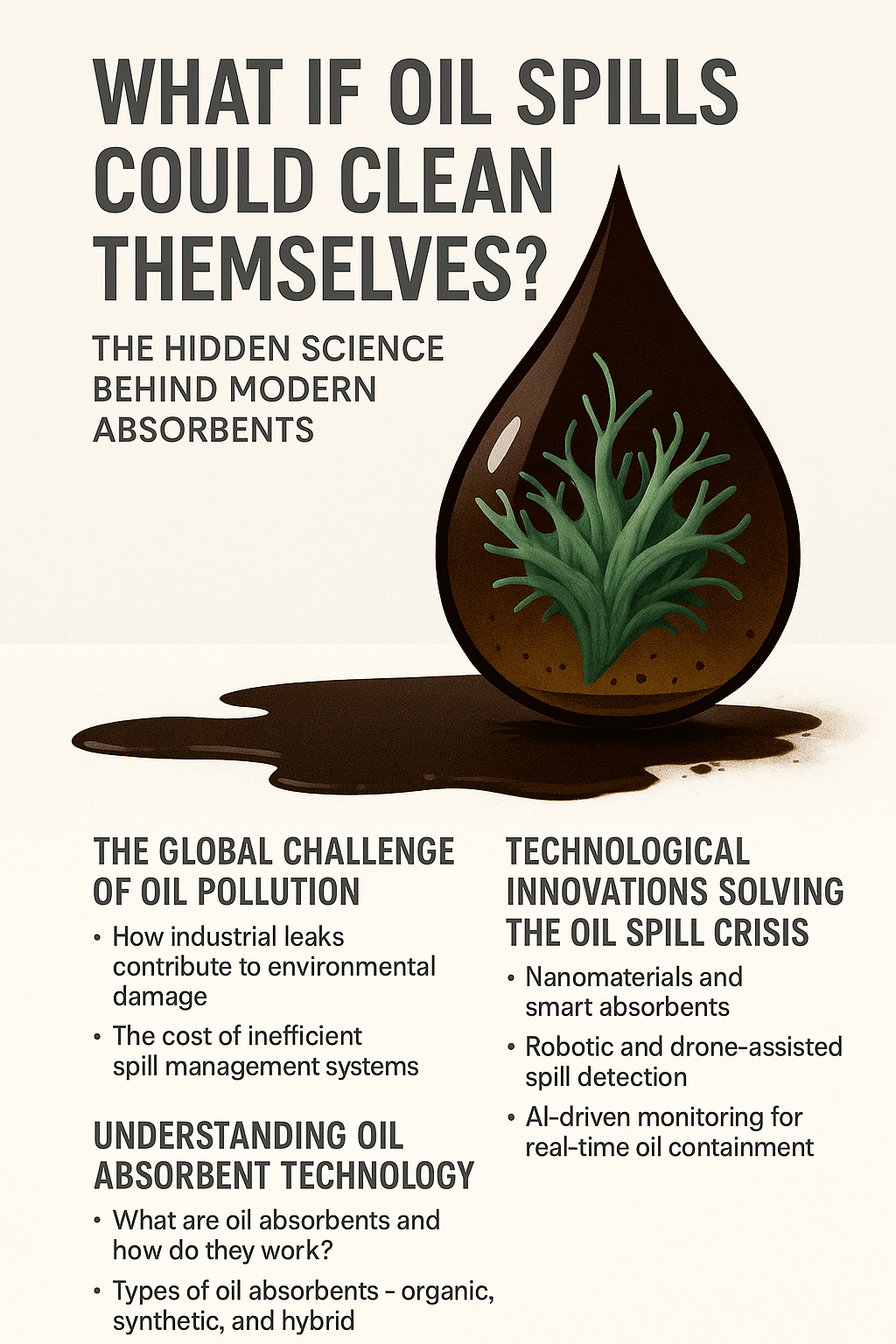
Imagine if oil spills could clean themselves — no boats, no booms, and no chemical dispersants. Thanks to rapid advances in oil absorbent technology, that idea isn’t just science fiction anymore. Scientists and engineers are developing materials that can soak up oil, repel water, and even regenerate for reuse. These breakthroughs are transforming how industries respond to environmental disasters.
From the Deepwater Horizon spill to everyday leaks in factories, oil pollution has left a long-lasting mark on our planet. But a new wave of innovation is changing the story. The hidden science behind modern absorbents could redefine what environmental responsibility looks like in the 21st century.
The Global Challenge of Oil Pollution
How Industrial Leaks Contribute to Environmental Damage
Oil spills don’t just make headlines — they destroy ecosystems. When crude oil or refined products leak into water or soil, they suffocate marine life and contaminate food chains. Even small spills in factories or workshops release hydrocarbons that harm air and groundwater quality. Over time, these pollutants lead to severe ecological imbalance and public health risks.
The Cost of Inefficient Spill Management Systems
Traditional cleanup tools, like booms and pads, only absorb surface oil and often leave residue behind. They also require massive manpower and disposal resources. Every ton of oil collected this way adds waste to landfills, creating a second layer of pollution. For industries, that means higher costs and stricter environmental compliance requirements.
Why Traditional Absorbents Fail to Contain Oil Spills
Most absorbents are made from polypropylene, a plastic that’s cheap but not sustainable. These materials lose effectiveness when exposed to saltwater or high temperatures. They absorb water along with oil, reducing their efficiency and creating heavy, soggy waste. This is where modern absorbent science is stepping in to fill the gaps.
Understanding Oil Absorbent Technology
What Are Oil Absorbents and How Do They Work?
Oil absorbents are materials that selectively attract oil molecules while repelling water. They rely on oleophilic (oil-loving) and hydrophobic (water-repelling) properties to isolate oil from any surface. Once the oil sticks to the absorbent, it can either be squeezed out, burned for energy, or processed for reuse.
This selective behavior makes absorbents essential tools in marine cleanup operations, industrial maintenance, and environmental restoration.
Types of Oil Absorbents — Organic, Synthetic, and Hybrid
There are three main categories of oil absorbents:
- Organic Absorbents: Made from natural fibers like cotton, peat moss, or sawdust. They’re biodegradable but often less efficient.
- Synthetic Absorbents: Usually made from polypropylene or polyurethane, offering high absorption rates but poor recyclability.
- Hybrid Absorbents: Combine natural and engineered materials, balancing sustainability and performance.
Hybrid absorbents are now at the center of innovation because they offer both environmental safety and efficiency.
How Technology Enhances Absorption Efficiency
Modern technologies enhance absorbents through nanostructured coatings, porous membranes, and chemical functionalization. These innovations increase the surface area, allowing absorbents to capture more oil in less time. Some advanced materials can even separate oil from water automatically, a process inspired by biomimicry — mimicking nature’s designs like lotus leaves and fish scales.
Common Problems in Oil Spill Response
Limited Absorption Capacity and Reusability
Many conventional absorbents can only be used once. After saturation, they must be discarded, increasing operational waste. This single-use limitation raises cleanup costs and puts extra stress on disposal systems. The challenge lies in creating absorbents that can be regenerated without losing efficiency.
Disposal Challenges of Contaminated Absorbents
Once absorbents soak up oil, they become hazardous waste. Burning or landfilling them releases volatile organic compounds (VOCs) and greenhouse gases. Proper disposal requires strict hazardous waste treatment, which is both expensive and time-consuming. This issue highlights the need for biodegradable or recyclable absorbent materials.
High Costs and Energy Use in Cleanup Operations
Oil spill responses demand heavy equipment, labor, and fuel. In remote locations like offshore platforms, transporting cleanup gear becomes another challenge. The energy required to produce and deploy absorbents often outweighs the environmental benefits. The answer lies in developing lightweight, reusable, and autonomous solutions.
Technological Innovations Solving the Oil Spill Crisis
Nanomaterials and Smart Absorbents
Nanotechnology has introduced a new class of absorbents with unprecedented precision. Materials like graphene oxide, carbon nanotubes, and silica aerogels can absorb many times their weight in oil. These nanomaterials have ultra-high surface areas, allowing for faster and more selective oil capture. Some smart absorbents even change color when saturated, signaling when they’re ready for collection.
Robotic and Drone-Assisted Spill Detection
In recent years, AI-driven drones and robotic skimmers have revolutionized spill monitoring. These machines can identify oil slicks using infrared imaging and deploy absorbent pads automatically. Combining robotics with smart absorbents makes cleanup faster, safer, and more efficient — especially in hazardous or hard-to-reach areas.
AI-Driven Monitoring for Real-Time Oil Containment
Artificial Intelligence and machine learning algorithms now help predict oil spill behavior based on wind, current, and temperature data. Integrated systems can trigger automated containment responses within minutes. In the near future, connected sensors might deploy absorbents the instant an oil leak is detected — creating a self-cleaning ecosystem that works in real time.
Sustainability and Future Directions
Recycling and Regeneration of Used Absorbents
Researchers are developing absorbents that can be wrung out, cleaned, and reused multiple times. Some advanced materials recover over 90% of absorbed oil, turning waste into fuel. This closed-loop recycling system dramatically cuts costs and waste output. It’s a big step toward sustainable industrial operations.
Policy Support for Eco-Friendly Spill Management
Government agencies like the Environmental Protection Agency (EPA) and National Oceanic and Atmospheric Administration (NOAA) are promoting cleaner oil recovery methods. By funding green technologies and setting strict disposal standards, they push industries toward adopting sustainable absorbents. Global cooperation is also growing through initiatives that target marine protection and pollution reduction.
The Road Toward a Circular Economy in Oil Waste Control
The ultimate goal is to make oil spill response part of a circular economy — where materials are reused rather than discarded. Imagine absorbents made from recycled waste that can themselves be recycled after use. With continued innovation, the future may bring fully self-healing materials capable of separating and degrading oil without human intervention.
Read also How Different Groups Can Enjoy Brunch in Dubai?
Conclusion
The question — what if oil spills could clean themselves? — might not be fantasy for long. Thanks to modern absorbent technology, the future of spill control looks smarter, cleaner, and more sustainable. These innovations blend science, engineering, and environmental ethics into practical tools that protect both industry and nature.
Oil absorbents are no longer just pads or booms — they’re intelligent systems designed to heal the planet. With nanomaterials, AI integration, and eco-friendly design, the dream of self-cleaning oil spills is closer than ever. The next time oil meets water, it might not spell disaster — it could mark the beginning of a technological cleanup revolution.