Have you ever rolled out what you thought was the perfect roti, all nice and round, only to have it come off the tawa with one side pale and undercooked while the other looks like it just came back from a holiday in hell? You flip it once, then again, wait for it to puff… and nothing. Flat as a pancake. Frustrating, right?
Been there. And honestly, a lot of the time, it’s not your rolling skills or your dough. It might just be your tawa being… well, not very helpful.
If you’ve ever gone tawa-shopping, you know it’s like stepping into a maze. Cast iron, non-stick, hard-anodised, granite, aluminium..argh, how many kinds of flat pans can there be?
So, let’s break it down. No jargon. Just honest, useful stuff to help you figure out which tawa actually belongs in your kitchen.
Why Choosing the Right Roti Tawa Actually Matters?
You might be thinking, “It’s just a tawa. It’s a flat thing you put on a stove. What’s the big deal?” Fair. A good roti tawa heats evenly, doesn’t stick, doesn’t burn your rotis, and helps them puff beautifully. A not-so-great one? It’ll have you flipping a single roti 17 times while yelling at it to behave.
And it’s not just about the roti. A bad tawa can slowly kill your motivation to cook. I mean, who wants to wrestle with cookware first thing in the morning when you’re already running late and your tea’s gone cold?
The right tawa? Heats up when it should, cooks how you want, and doesn’t complain when you use it again and again.
Understanding Different Types of Roti Tawa
Each roti tawa type has its own pros, quirks, and learning curves. Let’s see which one fits your cooking needs the best.
1. Cast Iron Roti Tawa
Ah yes, the OG. If your grandma made rotis, this is probably what she used. Cast iron tawas are old-school and awesome. They get hot, hold that heat for ages, and make your rotis puff like magic. There’s also this subtle earthy flavour that somehow sneaks in and makes everything taste better.
But they need care. You can’t just rinse and stack it in the sink. If you leave it wet, it might rust. So yeah, after every use, you dry it, oil it a bit, and store it properly.
2. Non-Stick Roti Tawa
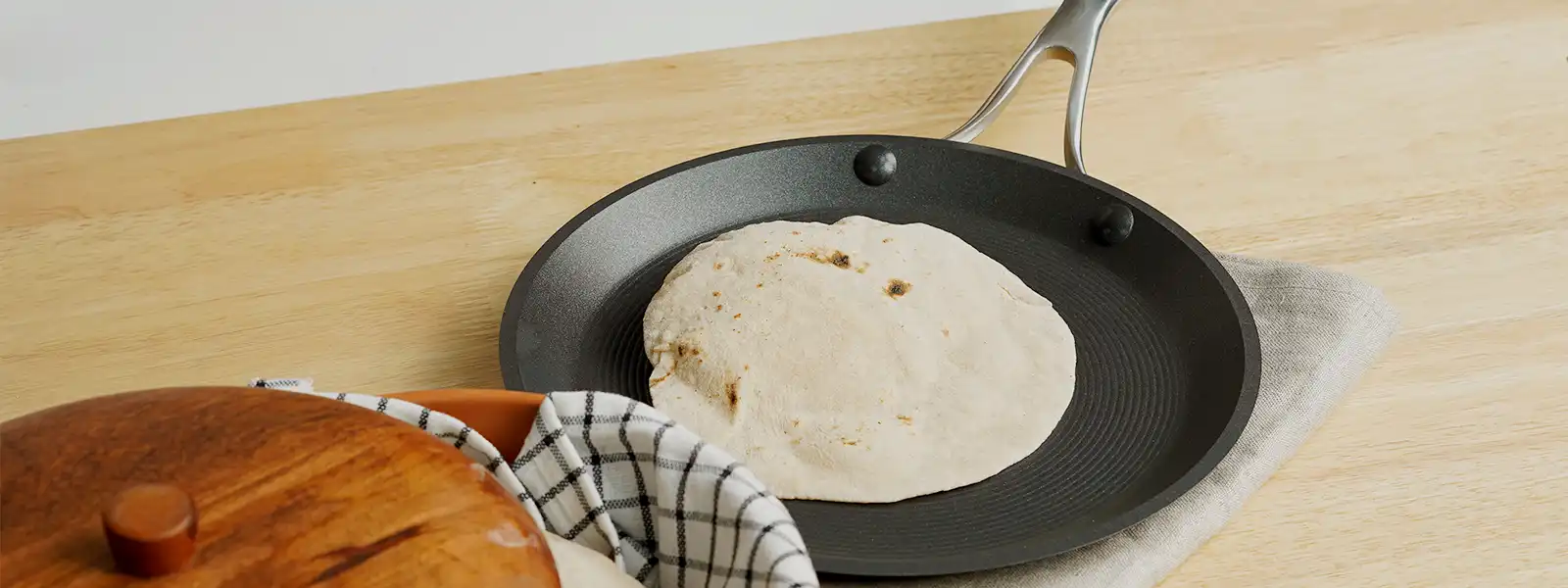
If you’re the “I need breakfast done in 10 minutes” kind of person (hi, same), non-stick is your best friend. It heats fast, needs almost no oil, and cleaning is a breeze. Seriously, one wipe and done. It’s perfect for busy mornings when you’re flipping rotis while packing lunch and checking emails.
Downside? The coating doesn’t last forever. You’ve got to treat it gently. No metal spoons, no scrubbing like you’re mad at it. Just a soft touch and it’ll serve you well for a good few years.
3. Granite or Hard-Anodised Roti Tawa
This is like the hybrid car of the tawa world. Sleek, modern, and balanced. It heats evenly, doesn’t scratch easily, and you can use it for more than just rotis: pancakes, dosas, even grilled sandwiches if you’re feeling adventurous.
It looks fancy but works hard. And it’s not high-maintenance either. So if you want something that’s durable but low effort, this might be the sweet spot.
4. Aluminium Roti Tawa
Lightweight and heats super fast. If you only make rotis once in a blue moon or need something cheap and easy, aluminium works. But it’s not great for daily use. It cools quickly and can cook unevenly, which is annoying when you’re aiming for that perfect golden-brown finish.
What to Look for When Choosing Your Roti Tawa?
So now that you’ve got the types down, let’s talk features.
1. Size and Thickness
Medium size is the sweet spot: somewhere around 26 to 28 cm. Small roti tawas can’t fit a full roti properly, and huge ones just take forever to heat. Thickness also matters. Thicker tawas mean more even heating, fewer random burnt spots, and better control.
Thin tawas? They’re like that one friend who overreacts to everything. Too hot, too fast.
2. Handle Design
Ever burned your fingers trying to flip a roti? Ouch. A solid handle saves you. Look for something heat-resistant: wooden, silicone, or cool-touch plastic. Also, it should feel steady, not wobbly like it’s about to fall off mid-roti.
3. Stove Compatibility
Got a gas stove? Electric? Induction? Make sure your roti tawa matches your stove. Some are great on gas but don’t work on induction at all. If your kitchen has multiple types, get something that works across the board. Saves the headache later.
4. Cleaning and Maintenance
This one’s huge. Be honest with yourself: are you going to season a cast-iron tawa every week? If not, maybe go for something easier to maintain. Non-stick and hard-anodised are super low-fuss. Just wipe and go.
Cast iron? Amazing, but it needs attention. Like a plant. Or a cat.
5. Long-Term Durability
Sometimes cheap tawas look tempting, but trust me, you’ll probably be buying another one in a few months. Better to invest a little more upfront and get something that lasts. A good tawa will survive years of daily use if you treat it right.
How to Know Which Roti Tawa Suits You Best?
If you love traditional cooking, don’t mind a bit of extra care, and want rotis that puff like clouds, go for cast iron.
- If your mornings are hectic and you need speed, go non-stick.
- If you want durability with minimal fuss, hard-anodised or granite is your best bet.
- And if you make rotis like once a month? Aluminium will do the job.
Conclusion
A good roti tawa is more than just a flat pan. It’s your daily partner in crime for cooking. When you find one that suits your style, everything gets easier. Rotis come out better, cooking is faster, and cleanup doesn’t make you want to cry.
Whether you go with the rustic charm of cast iron or the quick convenience of non-stick, the best tawa is the one that makes your everyday cooking feel less like a chore and more like a rhythm.