Introduction
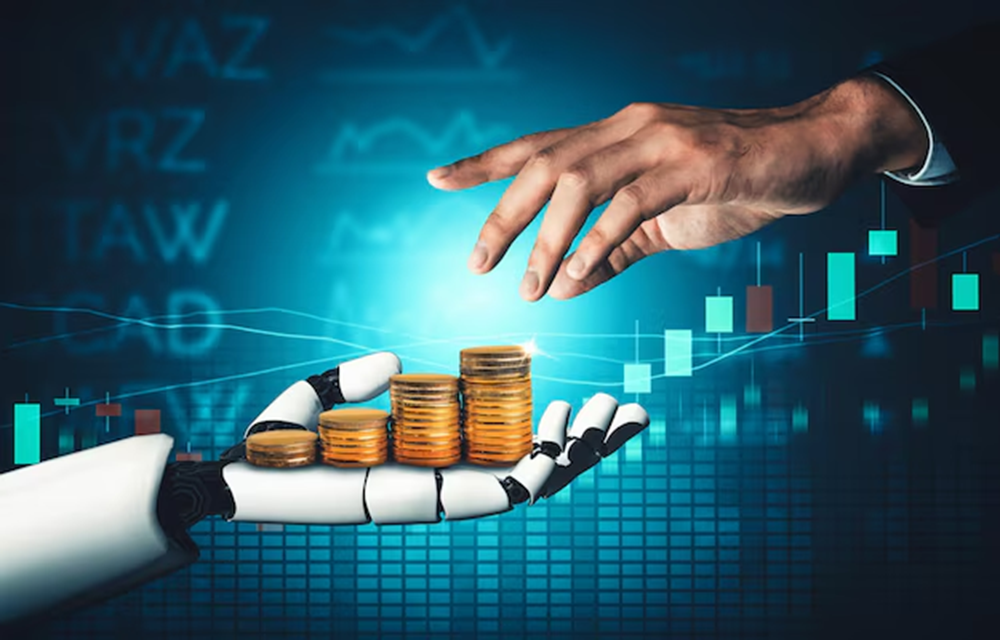
For decades, the idea of passive income sounded like a dream — money flowing in while you slept, worked, or traveled. But in 2025, that dream is no longer reserved for the ultra-wealthy or early adopters. It’s been democratized by data, automation, and artificial intelligence.
We’ve reached the point where algorithms don’t just trade stocks or suggest portfolios; they actually learn from behavior, sentiment, and even emotion. Predictive technology is reshaping how we invest, spend, and build wealth — creating a new intersection where automation meets autonomy.
This isn’t the end of financial intuition. It’s its evolution.
1. From Guesswork to Guided Strategy
The average investor once relied on gut instinct, market rumors, and the occasional YouTube tip. Today, predictive models and machine-learning systems have made that approach obsolete.
Artificial intelligence can now process millions of data points — from earnings reports and economic indicators to tweet sentiment and global news — in seconds. Investors no longer need to “time” the market. They can train the system to react for them.
AI-assisted trading platforms are quietly transforming investing from a human guessing game into a data-driven discipline. By studying market momentum, volatility, and even crowd behavior, these systems can predict short-term price movements with remarkable precision.
That’s why more investors are relying on AI-powered investment platforms that automate technical analysis and portfolio management — turning complex trading signals into accessible insights.
2. The Predictive Revolution in Finance
Predictive analytics isn’t just about identifying opportunities — it’s about preventing losses.
By monitoring correlations that humans might miss, AI can detect early warning signs before they turn into major dips. For instance, if sentiment toward a tech stock sours globally, algorithms can recognize that shift days before it reflects in price charts.
The technology doesn’t “replace” investors; it protects them from cognitive bias. It filters noise, identifies patterns, and reacts faster than emotion ever could.
And as these systems mature, they’re learning context. Instead of merely reacting to numbers, they interpret events — giving investors an advantage once reserved for institutional desks.
3. The Human-Machine Partnership
There’s a common fear that AI will eventually make investors irrelevant. In reality, it’s creating hybrid investors — humans augmented by algorithms.
The most successful individuals don’t hand over total control; they use AI as a co-pilot. The algorithm handles data-driven tasks while humans make the strategic calls — ethics, long-term allocation, and risk appetite.
This partnership is why more retail investors are outperforming traditional benchmarks. The key isn’t domination; it’s delegation.
4. Building Reliable Income Streams Through Smart Automation
Automation isn’t new in finance — but its precision is.
Recurring revenue and portfolio automation tools now allow people to turn sporadic wins into consistent income. Predictive models rebalance holdings dynamically, moving capital between asset classes as conditions change.
In other words, your portfolio doesn’t just sit there; it learns, adapts, and grows.
Investors who combine automation with human oversight are building financial engines — systems that work around the clock to generate steady returns while managing downside risk.
5. The Infrastructure Behind Predictive Wealth
Of course, even the smartest system is useless without stable infrastructure. Payment processors, compliance frameworks, and secure transaction channels are what keep the digital economy alive.
In the early days of online investing, high-risk industries struggled to maintain consistent transaction flow. Now, modern entrepreneurs depend on secure merchant solutions for global payments that allow capital to move freely between markets, exchanges, and wallets without disruption.
Whether someone is trading crypto, running a SaaS platform, or building a marketplace, frictionless payment infrastructure ensures stability — the foundation that keeps predictive systems operational.
6. Passive Income Reimagined
The classic image of passive income — a rental property or a dividend stock — has expanded dramatically.
In 2025, investors are creating digital income streams that merge automation with intelligence:
- Algorithmic stock portfolios that automatically reinvest profits
- Crypto staking programs with dynamic yield adjustment
- Revenue-sharing platforms that distribute payouts through smart contracts
Data-driven tools are removing the biggest obstacle to passive wealth — maintenance. What once required constant attention can now be managed through automated long-term portfolio strategies that adjust holdings for optimal balance and compounding.
These systems don’t eliminate risk — but they transform it into something measurable, predictable, and manageable.
7. How Predictive Tech Shapes Investor Psychology
Investing has always been part math, part emotion. The problem is that emotion usually wins.
Predictive tools are rewriting that story. By replacing intuition with probability, investors feel less stress, make fewer impulsive decisions, and stay consistent longer — the true secret to compounding.
AI’s most underrated benefit isn’t speed; it’s discipline.
It enforces patience in a world addicted to immediacy. It rewards long-term thinking and discourages reactionary panic. That psychological balance is what separates sustainable investors from speculators.
8. When AI Meets Ethics
With great automation comes great responsibility.
The algorithms deciding your trades also reflect the data they’re trained on — and bias can creep in. That’s why transparency and human oversight matter more than ever.
Investors are increasingly asking where their systems source data, how they interpret it, and whether they align with ethical investing standards.
The next wave of predictive finance won’t just chase profit. It’ll balance performance with purpose — a future where AI portfolios might even exclude industries or assets that conflict with personal values.
9. The Integration Era: One Dashboard, Infinite Control
The fragmentation of financial tools is fading fast.
By 2025, most serious investors operate from integrated ecosystems that unify payments, investing, analytics, and compliance into a single interface.
A trader can fund an account, deploy capital, monitor performance, and withdraw profits across currencies — all in one environment. AI models cross-analyze every layer, learning from each transaction to fine-tune future recommendations.
The result? Investing that feels effortless, but is anything but simple under the hood.
10. Data as the New Dividend
If capital was the engine of the 20th century, data is the fuel of the 21st.
AI thrives on feedback loops: every trade, click, or transaction sharpens its predictive edge. This is where passive income turns proactive — your system doesn’t just earn; it learns.
Over time, these learning models generate what some experts call “data dividends” — insights that improve performance without additional input.
It’s the first form of income that compounds in understanding as well as value.
11. The Barriers Are Gone — But Discipline Remains
The best part? The entry barriers that once kept predictive finance exclusive are gone.
Low-cost automation tools, open-source APIs, and decentralized finance projects have made sophisticated investing accessible to anyone with a smartphone.
But while access is free, mastery isn’t. AI still rewards patience, consistency, and responsible management. Predictive wealth systems work best for those who treat them like businesses — monitored, optimized, and improved continually.
12. The Future of Investing Is Cooperative
The real revolution of predictive tech isn’t individual success — it’s collaboration.
Communities of investors, data scientists, and entrepreneurs are now pooling knowledge to train shared AI systems. The result is collective intelligence — networks that adapt faster than any single human or algorithm could.
This shift mirrors a broader truth: in the information economy, collaboration compounds faster than capital.
13. The Final Shift: From Reaction to Readiness
The defining trait of investors in 2025 isn’t aggressiveness or risk-taking — it’s readiness.
Predictive technology doesn’t eliminate volatility; it prepares you for it.
Automation doesn’t remove uncertainty; it gives you tools to respond instantly.
Financial independence isn’t about control anymore — it’s about confidence in the systems you build.
Conclusion
The union of artificial intelligence and investing has done more than improve accuracy. It’s redefined what “passive” really means.
We’re entering an age where money grows through momentum — where systems evolve with every trade, every signal, every insight.
From AI-powered investing tools that analyze markets in milliseconds, to secure payment frameworks that keep global transactions stable, and automated portfolio strategies that quietly build long-term wealth — predictive technology is the bridge between potential and progress.
In this new landscape, the smartest investors aren’t the ones chasing the next trend. They’re the ones who understand a simple truth:
the future of wealth isn’t about predicting markets — it’s about building systems that predict for you.