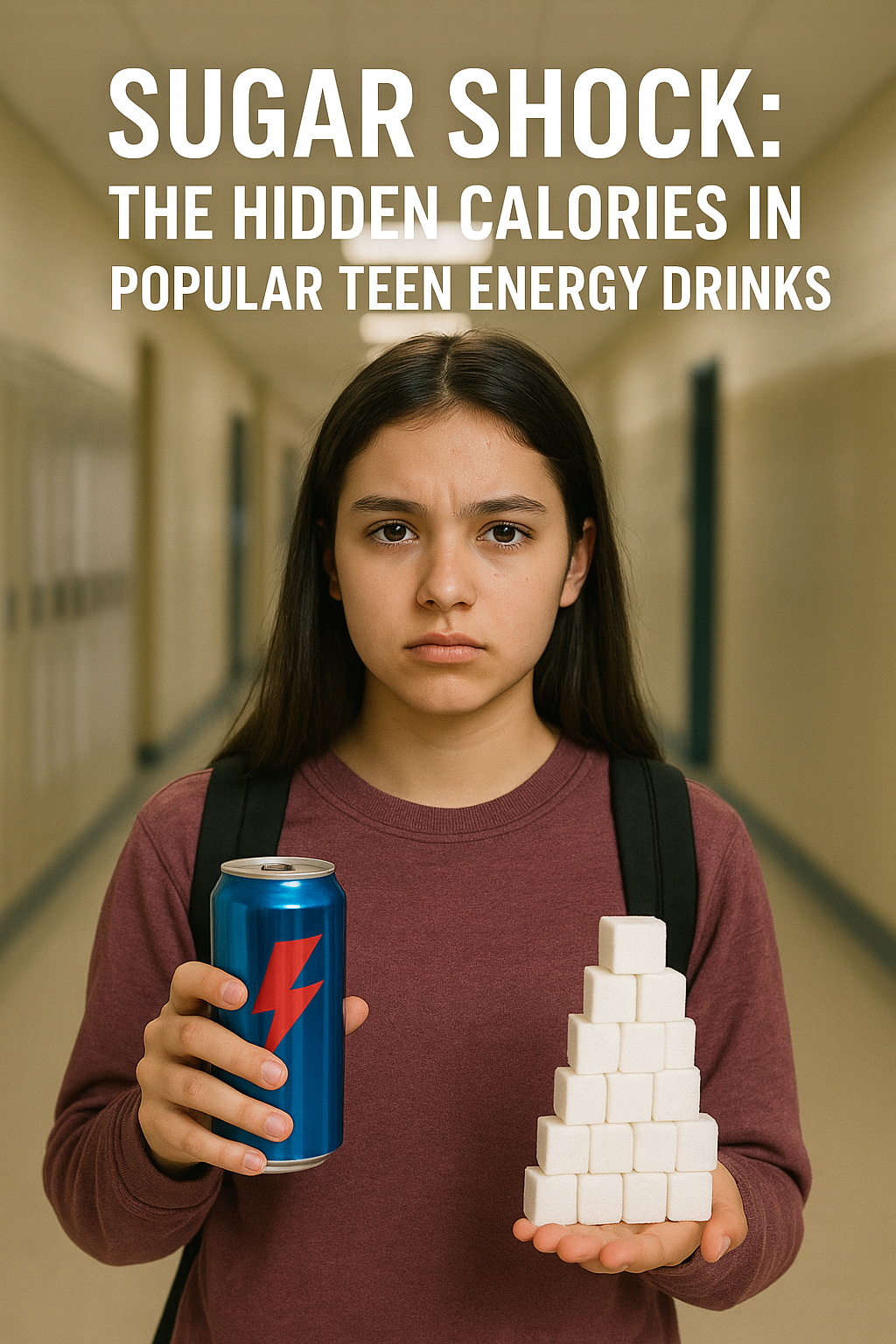
Energy drinks are now part of the life of most teenagers. It can be cramming for an exam, getting fueled before starting to practice sports, or just wanting to be awake and keep up with a better day. All of these bright-colored cans promise a quick boost of energy and better concentration. However, there is a dark side to the glittering marketing and it is that a lot of these beverages contain a lot of hidden calories and sugar that leads to long term effects on adolescent health.
In this article, the sugar and calorie content of common energy drinks is broken down, why continuing to consume these energy drinks is harmful, and alternative options that won’t have the same negative effects but still offer the power one needs are discussed.
The Teenage Appeal of Energy Drinks
Adolescents are under a lot of pressure to achieve positive results at school, in social life, or at sport. Energy drinks tend to come in as a fast solution in such a high-need environment. These advantages like enhanced focus, energy and alertness are especially attractive to the youth who have to attend school, sporting activities, and extracurricular activities.
Nevertheless, as much as energy drinks can provide a short-term burst of energy, they are very costly in terms of nutrition. This is not only caffeine, but also the sugar content lurking in each can.
Calories in Non-Obvious Energy Drinks
What most teenagers and parents fail to notice is that energy drinks usually have a lot of sugar, much or likely as much as sodas. In comparison, the American Heart Association suggests that adolescents should eat not more than 25 grams of added sugar/day. However, one can of one of the well-known energy drinks can surpass this easily.
Indeed, as an illustration of such this breakdown of common energy drinks,, a wide variety of brands contain anywhere between 27 and 54 grams of sugar in one serving. That would be the same as 7 to 13 teaspoons of sugar on a single beverage. In addition to this sugar burden, the calories can also skyrocket up to 200 per can, most of which offer minimal nutritional value.
When fed on daily, these extra sugars and calories build up in the body, and consequently, cause a domino effect of health-related problems.
The Role of Excess Sugar in Increasing Weight
Sugar is a rapid burning carbohydrate. When ingested, it elevates blood sugar levels and gives one a quick-but temporary burst of energy. Nonetheless, the body reacts by producing insulin, a hormone that aids the process of transferring sugar in the blood to the cells. When the amount of sugar consumed is always higher than the amount of energy being spent, the surplus is stored as fat.
In teenagers who do not always use the energy stored in their bodies to do vigorous exercises, this continuous cycle causes them to increase their weight with time. Gradually, this is adding to the risk of obesity, which is currently prevalent among almost one-fifth of adolescents around the globe.
The Correlation of Energy Drinks and Obesity
The energy drinks are being promoted as fitness supplements yet the excessive sugar in them undermines their health in the long-run. Research has indicated that the repeated use of sugary drinks such as energy drinks increases the chances of obesity among adolescents in a significant manner. This is not necessarily about aesthetics, but being an obese teen can lead to becoming an obese adult with a greater risk of type 2 diabetes, heart disease, and other metabolic disorders.
The most misleading aspect of energy drinks is that adolescents might take them thinking that they make a performance decision. Rather, they are feeding their bodies with empty calories that negate fitness and health achievements.
Sweet and Dental Health: An Underground Crisis
Energy drinks are harmful to the teeth besides causing weight gain. This forms a sugar-plus-acidity storm of the cavities and enamel erosion in these drinks.
- Sugar is very high in content nourishing the bad bacteria in the mouth and causing the accumulation of plaque and decay.
- Energy drinks contain acids (added) that wear the tooth enamel, the shell that protects the teeth against sensitivity and decay.
Dentists have cited the increasing rate of dental erosion among teenagers who consume energy drinks regularly. In contrast to the cavities, enamel erosion is irreversible and, therefore, it is imperative to prevent this process.
Caffeine and Calories Undercover: A Two Way Menace
Caffeine contributes to the problem although sugar is the greatest offender. The most energy drinks have 80 to 300 mg of caffeine in one serving, which is two or three cups of coffee. This, when mixed with sugar, forms a quick burst of energy that is potent yet short-lived and then a crash will occur.
The crash also causes teens to reach out to another can which adds to the sugar and calorie consumption of the day. In the long run, such a cycle may cause:
- Sleep disturbances
- Increased fatigue
- Mood swings
- Increased usage of sweet caffeinated beverages.
Less Dangerous Substitutes of Energy Drinks
The positive thing is that teens do not have to use energy drinks in order to get alert and energized. There are healthier alternatives to these which give energy in a sustainable way without the sugar rush.
Water with Citrus
One of the keys to energy that is most ignored is hydration. Lemon or orange slices in a glass of water will give some refreshment and a slight dose of vitamin C without calories.
Herbal Teas or Green Tea
The content of caffeine in teas is mild and Teas contain antioxidants that promote good health. Unsweetened ones do away with sugar that is not necessary.
Fruit Smoothies
Adding fruits such as bananas, berries or mangoes to your yogurt provides natural sugars, fiber and protein- this will give you sustainable energy and not a crash.
Protein Snacks
Protein-rich foods such as nuts, cheese, or hard-boiled eggs can keep the teen energy levels up and fuller, which prevents the desire to take sugary drinks.
Coconut Water
Coconut water is a healthier substitute for energy drinks as it is naturally hydrating and high in electrolytes to improve post-workout recovery.
The Reason Teens do not see the dangers
Teens do not realize the energy drink calorie and sugar effect because of a number of reasons:
- Marketing Influence: The images that the brands create around these beverages are cool, athletic and socially desirable.
- Portion Size Confusion: It can be so confusing because many teens believe that there is a difference between one can and one serving, though there are cans that actually are two servings.
- Learn to Pay Attention to Caffeine, and not to Sugar: The energy drinks when it comes to energy drinks are usually discussed in terms of caffeine, but not sugar.
- Peer Pressure: Adolescents tend to imitate the habits of their peers in terms of consumption without looking at the health trade-offs.
Developing a Healthy Choices Environment
Schools, communities, and parents are very important in influencing teens to healthy habits. Strategies include:
- Restricting the consumption of energy drinks at home.
- Promoting water or milk as a beverage of first choice.
- Promoting the school policies limiting the sale of high-sugar beverages.
- Educating teens on nutrition using open and non confrontational discussions.
With a change in the environment, we facilitate the work of the teens in turning to the healthier options other than the high calorie cans.
Conclusion: The First Step to Awareness
Energy drinks seem to be innocent, yet the sugar and calorie secret is something to reckon with. The frequent use does not only cause weight gain and obesity but also damages to the teeth and long-term health hazards. These risks are of great concern to teens who are still in the growing and developmental stage.
Change begins by being conscious. Parents and teens will be able to make better judgments by learning what is contained in ordinary energy drinks, replacing the high-sugar cans with healthier, more stimulating options. The slightest alterations in the present can help avoid greater health issues in the future and provide teens with the necessary energy without any unnecessary expenses.