
The allure of working abroad in a scenic country is powerful. Think about trading your daily commute to work with a walk around a historic city, your office cubicle with a live co-working space with a view of a busy marketplace, or your routine takeout with some weird street cuisine. This dream is becoming more real than ever to a wider group of people, particularly as countries around the world adopt the trend of remote working and digital nomad visas increase.
However, to make this lifestyle sustainable on a modest salary, say $2,000 USD a month, requires planning, a keen eye for value, and a good understanding of the legal environment.
For the sake of digital nomads, this article will analyze the actual requirements of being able to live legally and comfortably within a monthly budget of 2,000,000 in a few foreign countries.
It will also provide realistic cost breakdowns on much-needed items such as housing, food, and health insurance and more importantly, take you through the usually neglected legal requirements such as visas, taxes, and fees involved.
Finding Your Way: Visas, Taxes, and Insurance
The most important thing when staying abroad is staying legally. Overstaying a visa, illegal work, and failing to pay taxes can result in fines, deportation, and future travel restrictions.
A standard tourist visa may not be sufficient in case of long-term stays. Lots of nations are now launching Digital Nomad Visas ( DNVs ) or other long-term alternatives such as Temporary Resident Visas to attract and support remote workers.
For an in-depth and current description of visa fundamentals, as well as common questions on this, you can turn to the official governmental sources, such as the United States Department of State’s page on visa renewals.
Tax Obligations
Taxation for remote workers overseas may be complicated. Most countries in general work on the tax residency principle, whereby if an individual spends over 183 days (approximately six months) in a country within a year, the person becomes a tax resident of that state. This may imply that you will be subjected to taxation on your global income in that country.
Nevertheless, to know about tax, one needs professional advice. Before making a move, it is strongly advisable to seek advice from an expat-tax expert.
Country Spotlights: Can You Live on $2,000 a Month?
So, let us look at some of the trendy places for digital nomads and see if a $2,000 monthly budget is feasible, considering both cost of living and legal requirements.
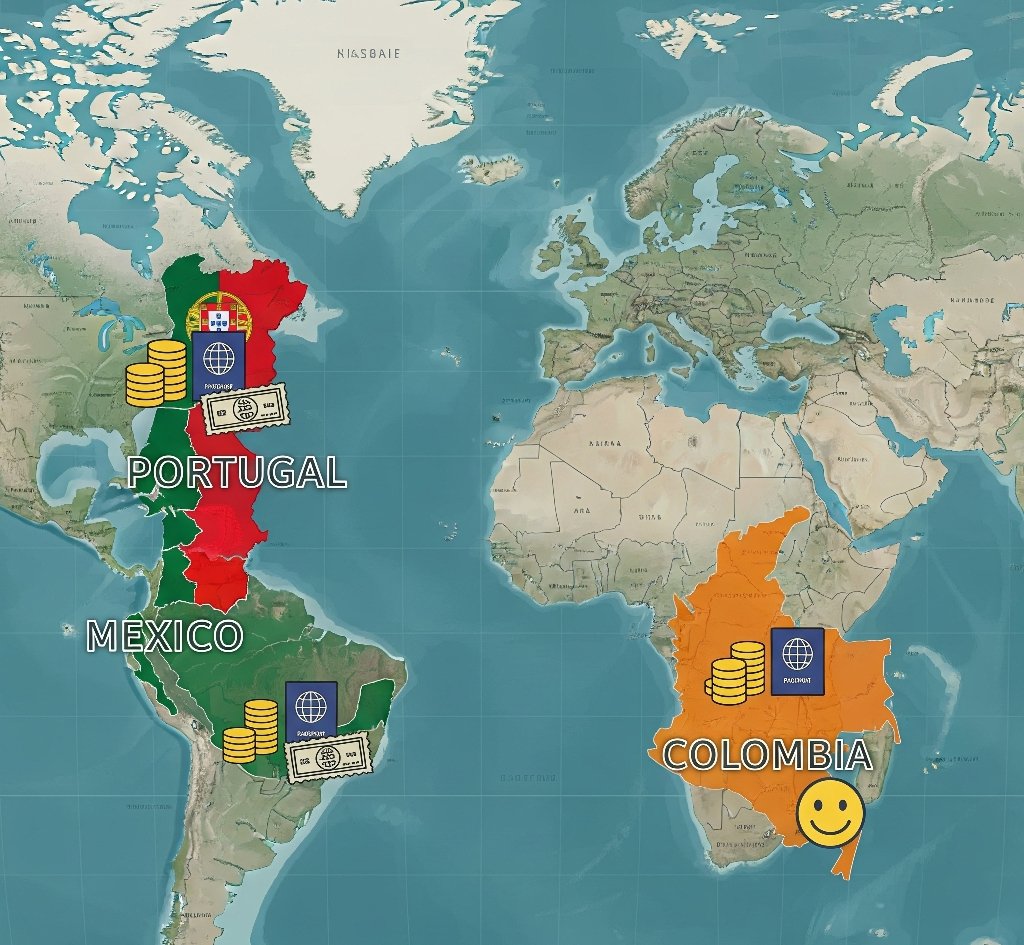
Portugal (Lisbon/Smaller Cities)
Portugal has something to offer to digital nomads: its beautiful cities and spectacular coastline, a relatively low cost of living (in comparison to other Western European countries). The nation has D8 Digital Nomad Visa, which is a visa specially created to support remote workers.
D8 Visa Requirements: The income requirement of D8 visa is normally 3,280 Euros (approximately 3,550 USD) per month as of 2024, and this is four times the minimum salary in Portugal. That already puts a strain on a $2000 budget since you would have to prove you have a higher income in order to get the visa itself. It also has a savings requirement of 36480 euros.
Budget Breakdown (Estimates based on figures of USD on month-to-month basis):
- Housing: Lisbon: 1-bedroom apartment in the central city may cost you easily $1,000 – $1,500+, making it tough for a budget level of $2,000. Out of the center there could be something at 800 – 1,200.
- Smaller Cities (e.g. Coimbra, Aveiro, Braga): An apartment outside of the center can cost between 600 – 900.
- Food: Groceries of one individual can be approximately 300 – 450 dollars. Food is cheap and you can get a meal that costs between 10 to 20 dollars. However, eating out at restaurants of moderate value would break the bank.
- Electricity, water, gas, and internet: You can expect to spend about 120 -180 dollars on electricity, water, gas, and a good internet plan.
- Transport: A monthly pass for public transport costs about 45- 60 dollars.
- Health Insurance: The mid-range individual coverage would be 80 – 150 dollars.
General Evaluation: It is quite difficult and even impossible to live in Lisbon and survive on $2,000 USD, taking into consideration the income requirement of D8 visa. In smaller cities, although daily living costs may be similar, the financial limit of the visa makes Portugal out of reach of anyone on a fixed income of 2,000/month unless another type of long-stay visa is acquired with different requirements, which may not be easily obtained by remote workers.
Mexico (Mexico City/Smaller Towns)
Mexico is a lovely country with a rich culture, a wide variety of nature, and an overall cheaper cost of living, which is why it is a very tempting destination for digital nomads. One of the common ways of getting a long-term stay is through the Temporary Resident Visa.
Temporary Resident Visa Requirements: The income requirement on the Temporary Resident Visa (non-lucrative) in Mexico is very high, and usually an income of at least 4,350 USD net is required monthly or a large balance of approximately 73,200 USD in the bank. This is also quite a task when working on a budget of $2,000.
Budget Breakdown (Estimates per Month in USD):
- Housing: In trendy expat regions such as Roma Norte or Condesa, rent of a 1-bedroom home may be $800 – $1,500+. Local neighborhoods or smaller studios may be available at a range of $600 – $900.
- Smaller Towns (e.g., Mrerida, Oaxaca, Guanajuato): The rent may reduce drastically with one-bedroom apartments easily rented at $400 – $700.
- Food: The cost of groceries is usually inexpensive and costs between 250-400 dollars. It is ridiculously cheap to eat out, particularly in basics like the local fondas or street food stands (meals at 5-10 dollars). The average cost of mid-range restaurants may be about 20 – 30 dollars per capita.
- Utilities & Internet: Count on $70 -120 for the electricity, water, gas, and internet.
- Transport: The public transport in Mexico City (metro, metrobus) is very cheap. A monthly pass may cost between 15 – 25 dollars. Local buses and walking are cheap in small towns.
- Health Insurance: The costs of taking health insurance cover are between 50 – 150. There are public options, such as IMSS, though expats tend to go with a private option due to its greater coverage and reduced waitlists.
Overall Assessment: The cost of living in most regions of Mexico may match a $2,000 monthly expense, but the income requirement of the Temporary Resident Visa serves as a substantial barrier. It is important to fulfil the financial requirements of the visa. Provided you can do that, it is quite feasible to live comfortably on 2,000 dollars a month, even outside of the most expensive neighborhoods of Mexico City.
Colombia (Medellín/Cali/Barranquilla)
Colombia has become one of the most popular destinations for digital nomads, and Medellín is one of the cities with a favorable climate and rich culture. Colombia provides a special Digital Nomad Visa.
Digital Nomad Visa Requirements: The digital nomad visa in Colombia is available to people with one of the lowest income levels. It costs much less than a $2,000 monthly budget, and Colombia can be considered an excellent choice as a legal remote worker destination. The visa is normally awarded for up to two years.
Monthly Budget breakdown forecast in USD
- Housing: Medellin (El Poblado/Laureles): An apartment with one bedroom may cost 500-800 on popular expat locations. Less local neighborhood or shared accommodation can be availed at cheaper rates.
- Cali/Barranquilla: You can pay even less, 1-bedroom apartment rent normally is 350- 600 dollars.
- Food: Food is very cheap, groceries cost roughly between 200 and 350 dollars. Local restaurants (menu del dya) are extremely inexpensive and can be as cheap as 3 to 7 dollars. The high-end food outlets will be more expensive, yet affordable in Western markets.
- Utilities and Internet: These average about $60 – $100 apiece.
- Transport: The transportation is extremely cheap, e.g. public transport (metro, buses). Generally, a monthly transport budget of 20 – 40 dollars is enough.
- Health Insurance: Largely, expats pay between 50 and 100 dollars a month to acquire a health insurance policy. Foreigners are usually required to take out the public EPS which is income-based (approximately 12.5 percent of your declared income, but with most expats, it is usually around 100-200 dollars) and covers everything comprehensively.
General assessment: Colombia is probably the most operable nation in which one can live legally on $2,000 a month remote income. It is a good candidate with a low cost of living and a rather low income requirement for the digital nomad visa. Even without living in the most luxurious residential areas, you can live rather comfortably and have some money and time to enjoy.
Strategic Budgeting: Making Your $2,000 Go Further
On a destination of your choice, proper budgeting is important to stay within your monthly budget of 2000 dollars.
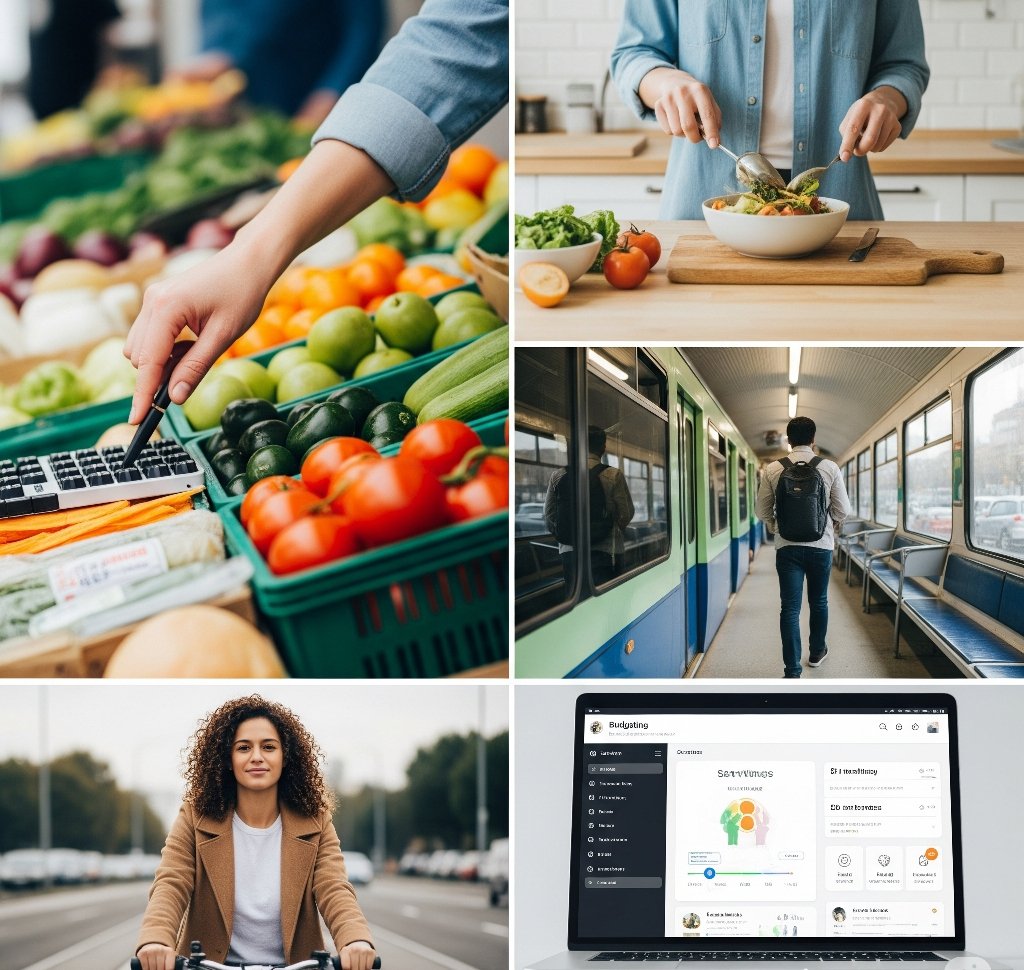
Housing Hacks
The biggest cost is expected to be a rental. To maintain it low, the following are what to do:
- Long-terms vs. Short-terms Rentals: Monthly long-term rent is much cheaper in contrast to nightly and weekly rates. Search apartment websites in the local area or Facebook groups of expats.
- Rent Outside the City Centers: Prices decrease significantly after a short bus ride or two stops in the metro from the main tourist zones.
- House-Sitting or Co-Living: House-sitting can be an option when you attempt to stay in someone else’s house. Short-term and co-living can pose another alternative where utilities and other amenities are provided at a single rate.
Savvy Spending on Food
A lot of costs can be incurred through food. The following are what to do:
- Cooking at Home: Eating on the go, even on a budget, will cost you more than your food budget. Use local foods and prepare at least the majority of your dishes.
- Visit local markets: You may find fresh fruits and vegetables, meat, and dairy at lower costs and better quality when you visit the local markets instead of going to supermarkets.
- Local food: Local cuisine incorporates ingredients that are easily available and cheap. Do not use imported goods which prove quite costly.
Transportation Tips
- Use the Friendly Public Transport: Take buses, metros, and trams. They tend to be more convenient and quite cheap as compared to using taxis or ride-sharing applications.
- Walk or Cycle: It is better on your pocket and your health, and also can help you find new places.
Smart Choices of Healthcare
- Know the Local Options: Look into whether any subsidized care is provided by the local public healthcare system, even when you choose to have private insurance coverage.
Conscious Unplanned Expenditure
- Budget Entertainment: Seek free cultural events, parks, museums (they have free days) and hiking trails. The local cafes provide cheaper social activities as compared to bars.
- Restrain the Impulse Purchases: Be aware of trinkets, new fashions and fancy gadgets and all the minor expenses.
- Take advantage of Free Activities: There are free walking tours, local markets and relaxation spots.
Financial Discipline
- Follow expenses strictly: keep track of every single dollar with budgeting apps (such as Mint, YNAB) or a simple spreadsheet. This will assist in finding out how to reduce.
- Establish an Emergency Fund: A goal of 3-6 months of expenses in a convenient savings bank account. It is essential in case of emergency medical needs, traveling or employment problems.
- Avoid ATM Fees: You should withdraw larger sums of money every time or get cards without international ATM fees.
Is it a Possibility? Final Thoughts on Living on $2,000 Monthly Budget Abroad
It is not an easy task, but the dream of living in a foreign country legally on a monthly budget of 2,000 dollars is not impossible to fulfil, especially in places with a lower cost of living and easier-to-get digital nomad visas.
However, the secret of legally living in these countries lies in careful planning, strict budgeting and aggressive attitude to legal compliance.