In this era of enhanced sophistication, businesses are rapidly depending on digitalized technologies to run operations, deliver services and engage customers. From mobile apps to cloud computing and remote working hand tools, digital configuration has speed around every industrial sectors. Nether the less, as industries take in the scalability and convenience of digital systems, they are also reviewed to evolving and growing threat landscape.
Cyber hackers are becoming more prominent, more damaging and more highly advance. No longer restrictions to small scaled disruptions, cyber attacks now jeopardize corporate assets. Customer trust, intellectual property and business continuity. In the rise of digitalization, cybersecurity is no longer a past thought, it is a foundational business necessity.
This article will bring an in-depth dive into a robust cyber security strategy, from leveraging professional managed IT Services, and picking effective security frame works to employee advanced threat detection and education. We also will explain the impact of Backup and Disaster Recovery and Cyber Security Services in creating a defense architecture that is trusted by consumers, proactive and resilient.
The Expanding Threat Landscape
Evolution of Cyber Threats
In some years back, cyber hackers carried out attacks for minor financial gains or bragging rights. As we see them today, they are the work of highly professional criminal syndicates, group of hacktivists and even world state actors. Cyber crime has been maturing into a multibillion-dollar industry.
Modern Attacks Include:
- Ransomware: encrypts information and demands for money to release data.
- Business email compromise (BEC): acts as top staffs in fooling staffs into writing funds.
- Zera day exploits: aims at previously unknown vulnerabilities.
- Brute force attackers and Credential stuffing: leveraging exposed credentials to gain access
- Insider threats: employed workers making use of their access accidentally or intentionally.
These kind of know problems are becoming rapidly hard to notice or locate due to techniques they use such as polymorphic code, fileless malware, and living off the land attacks, which this all of this are used by advanced system tools to bypass detections.
Cybersecurity as a Business Imperative
Beyond IT: A Company-Wide Responsibility
Cybersecurity has rapidly decreased on being a confined to IT departments. It is not an intersection of being with all other departments, from finance handling transactions to HR managing personal information and compliance regulation overseeing.
Business leaders must know that:
- Just one data branch can cost a high amount of money in damage cost, reputational harm and fines.
- Loss of trust from customers, this can take a lot of time to rebuild.
- Regulatory non-compliance can end with the revocation of license, market exclusion and lawsuits.
By enabling cybersecurity to be a top lever concern, organizations can make a culture of accountability that starts at the very top and authorize every level.
Key Components of a Robust Cybersecurity Strategy
- Strategic Framework and Risk Assessments
The foundation of all strategies for cybersecurity is a well put through understanding for risk, which organisations must assess:
- What systems and data are more critical?
- What are the main fragile entry points?
- Which external threats are most likely?
Once these kinds are located, the next approach is picking a comprehensive frame work, that is:
- ISO/IEC 27001: world wide suits organisations seeking certification.
- NIST CSF: important for American institutes needing a structured, and flexible approach.
- CIS Controls: practical and focus for little to mid-sized businesses.
The picked framework will explain security plans, guide control execution, and lastly align investors around measurable security outcomes.
- Making use of managed IT Services
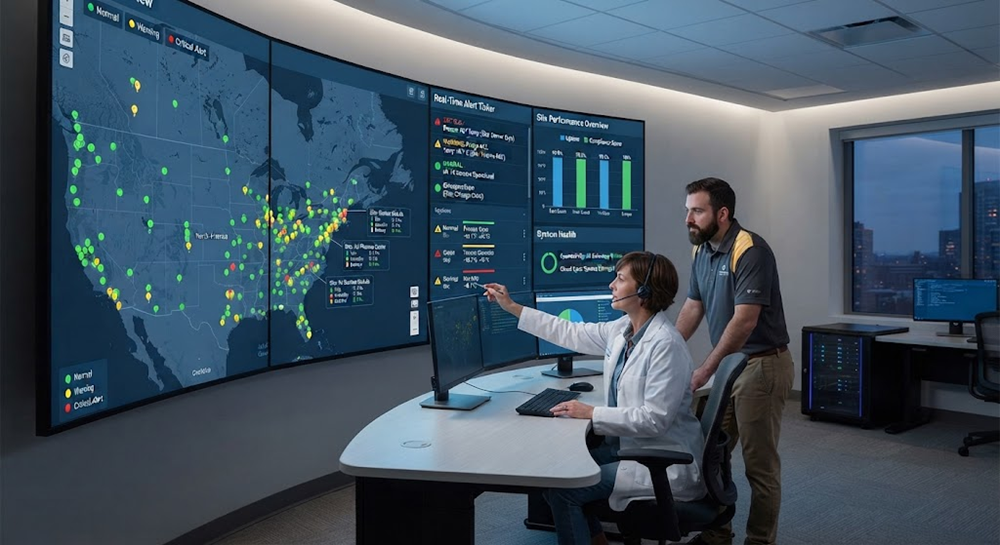
Cybersecurity is dynamic. Most internal teams cannot always act quick to every alert, installation of patches or even conduction threat hunting in real time, because there are new threats that are emerging on a daily basis. Managed IT Services comes in action to fill in this gap by providing:
- Monitoring of infrastructure continuously
- Vulnerability and patching management
- Security Information and Event Management (SIEM)
- End point detection and event management (EDR)
- IT strategic consultation
These king of services helps organisations to upscale their security maturity without the need of employing, training or even retaining in house cybersecurity teams, mainly valuable for SMB’s with limited IT resources.
- Endpoint Security and the Zero Trust Model
Overseas employees and Bring Your Own Device (BYOD) policies have taken network boundaries far beyond office walls. As an end point, organisations cannot at most trust anything outside or inside their networks by default. This issues as taken organisations to the rise of ZTA (Zero Trust Architecture.
Zero Trust works on the principle of “never trusting, and always make verification”. It includes:
- Least privilege access: users can only have access to the data they want.
- Frequent Authentication: authentication verification at every step.
- Micro segmentation: limitation of lateral movement within networks.
- Device health verification: Making sure endpoints meet security requirements.
Mixed with strong endpoints guarding tools like behavioral analytics, and Next Gen Antivirus (NGAV), Zero Trust rapidly lowered the risk of branches from both vectors internally and externally.
- Back up Strategy and Data Protection
Availability and integrity of data are crucial to any business. Cyberthreats that exfiltrate, compromise or destroy organisations data can paralyze operations. Institutes must protect their data at every stage:
- Encryption of information in transit and at rest
- Make limitation of information data access by role and importance.
- Frequently monitor and audit use of data
- Implementing versioning to recover from tampering
Additionally, robust Backup and Disaster Recovery services are Nonnegotiable. Back up are to be:
- Frequently tested and automated
- Geographically diversified
- Immutable to withstand ransomware encryption
- Fast restorable to lower downtime
Businesses that can swiftly bring back operations after a data occurrence showcases resilience and maintain customer confidence.
- Employee Training and Awareness
Errors of humans are the most fragile link in the chain of cybersecurity. Phishing still remains the main common initial attack vector, mainly due to its easy to exploit users who are untrained. The awareness of cybersecurity is crucial in strengthening the organizational defenses.
Effective plans include:
- Interactive real time training modules
- Monthly threat bulletins
- Simulated phishing campaigns
- Incentives for best security conduct
- Clear occurrence reporting policy
This kind of trainings should be tailored based on roles. For instance, developers should be taught secure coding techniques, and finance personnel may need to recognize BEC scams.
- State of the art Threat Response and Detection
Security based on traditional signatures is not longer adequate. Cyber threats use a fileless, stealthy and multi staged technique to bypass detections. Organisations must make use of behavior-based detection tools and AI powered, such as:
- SIEM: analyzes and centralizes logs for malformations.
- SOAR: Automates threats responses through multiple systems.
- XDR: this helps extended transparency across networks, endpoints, and clouded environments.
Organisations should also invest in CTI (cyber threat intelligence), which supports them in staying informed about rising attack trends and adapting defense accordingly.
- Professional Cybersecurity Services
When running with complexed persistent threats or regulatory requirements, outsourcing to professional Cyber Security Services can be a game changer. This service provides:
- Compliance audits and risk assessments
- Red teaming and penetration
- Assessment of cloud security
- 24/7 incident team response
Nether the less you are getting ready for a compliance or recovering from a breach, professional guidance makes sure there’s faster and more efficient outcomes.
Supporting Business Continuity and Regulatory Compliance
Cybersecurity is not just all about security, it is also about resilience. Organisations must make sure that they can continuously have safe seamless operations, even whereby they might be an event of a cyberattack. This includes:
- Backed up ISP’s and redundant systems
- Business Impact Analysis (BIA)
- Runbooks disaster recovery
- Crisis communication services
Running these services on a regular bass through simulations and tabletop exercises makes sure readiness when real crisis attack.
Compliance as a Catalyst for Security
Compliance mandate such as CCPA, HPAA, GDPR, and PCI DSS enforces strict data protection requirements. While others see compliance as a hindrance, progressive thinking businesses make use of t to raise their security posture.
A structured well compliance plan:
- Lowers liability risks
- Accountability and demonstrates visibility
- Enhances the trust of stakeholders
- Open doors to new markets
The Role of Emerging Technologies
Machine Learning and Artificial Intelligence
ML and AI revolutionizing cyber security. They support in detecting subtle patterns and malformation that humans may ignore. For example:
- Machine learning driven threat detection improves response accuracy and speed
- Identification of abnormal behaviors are done by User and Entity Behavior Analytics (UEBA).
- AI-enabled automation lowers time to containment during breaches.
Secure Access Service Edge (SASE)
As we advance, more users would want to work remotely and make use of cloud applications, the network perimeter dissolves. SASE mixes security and networking into just one cloud based service, delivering:
- Safe remote access
- Filtration of content
- Prevention of threats
- Cloud native scalability
All these models are ideal for distributing workforces and hybrid cloud environment.
Establishing Trust in a Digitalized World
Consumers are becoming more conscious of data security and privacy. In addition to resulting in penalties, violations damage trust. Having a solid cybersecurity plan allows you to:
- Safe guarding customer information
- Communicate visibly during incidents
- Prove compliance through certifications
- Strengthen the reputation of your brand
When customers know about their data are in good hands, they are most at ease to engage and remain loyal.
Conclusion
All said, as we know it cyber security is no longer a technical problem, it is a business critical strategy. As other cyberthreats rise they will be more sophisticated and consequences more severe, organisations must continuously reinforce their defenses. A robust cyber security plan needs:
- A deep teaching of regulatory and risk requirements
- The right partnership, such as Cyber Security Services and IT Services
- Resilient Back up and Disaster Recovery capabilities
- Alerted work staffs empowered through training
- State of the art detections and responsive technologies
By taking in the next step and making use of cybersecurity, organisations not only keep assets protected, but also establish resilience, ensuring continuity, and lastly earn the customers trust in a rapid growing digital world.