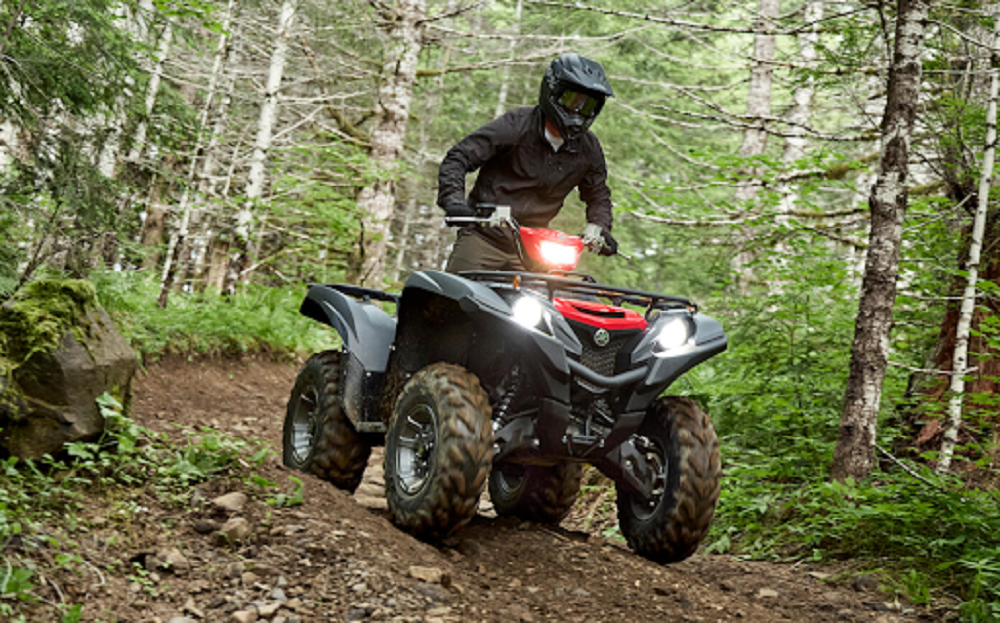
Ready to take your ATV or side-by-side to the next level? Stock machines are decently equipped for most riders, with peppy engines, capable suspension, and essential extras that let you carry a ton of gear on the trail or track. But all quad bike owners will start modding their machines just a few months after figuring out what they want.
Aside from the vast selection of power upgrades including aftermarket intakes, wider exhausts, and tuning kits, or handling accessories like long-travel travel suspension, lift kits, and the right tire and wheel combos, it’s often the cheapest mods that bring the best results. For improved stability, a wider track, and more safety at higher speeds, there’s nothing that rivals an inexpensive set of quad bike wheel spacers. This places the wheels further, resulting in more control.
What Spacers Are

Wheel spacers are metal discs of varying thickness that fit between the wheel hubs and the wheels. These aftermarket parts have one simple purpose – to move the wheels further out. This creates a wider track between the left and right wheels without having to spend hundreds on new A-arms, longer springs, or strengthened aftermarket axles. The wider track increases stability in turns and at high speeds, and the extra space provides the clearance for other performance mods, particularly bigger mud tires or big brake kits for improved stopping power.
Why Have Them on Your Quad
Spacers can be added to both the front and rear wheels. This brings a bunch of benefits:
- Improved handling – with thicknesses ranging from 0.25 to 3″, the wheel track can be increased from half to six inches. This results in improved handling, an ATV or side-by-side with better weight distribution, and overall improved stability on rough or loose surfaces. There’s more grip through the tires, less body roll when cornering, and a more planted feel that inspires confidence.
- Clearance for bigger tires and tire chains – spacing the wheels outwards allows for larger and wider tires or tire chains for snow or loose ground. This prevents rubbing on the plastics, mufflers, brake lines, or suspension and reduces the likelihood of wear.
- Space for brake upgrades – for big-engined machines with 100+bhp, the brakes are just as important as the drivetrain. The added space that comes with spacers means bigger multi-piston calipers and wider diameter rotors will stop the quad faster and safer than the stock brake components.
- Aggressive looks – quad bike wheel spacers are the easiest way to get a mean, aggressive look, with the wheels either in line with the bodywork or spread further out the fenders. Suspension and steering mods can get you similar results, but you’ll be spending quite a bit more for the privilege.
- Easy installation – if you’ve changed a wheel on your quad, then you’ll know how to install spacers. This requires only basic tools and is something you can do in the garage. The parts are simply bolted to the hubs, and the wheels to the spacers. Adding ATV or UTV spacers to all fours is a job completed within an hour, leaving you more time to ride.
- Inexpensive – rear spacers are more common, though complete front and rear sets with included lug nuts are sold for all major quad models for less than $100. The giveaway price though doesn’t mean low quality. The parts are CNC machined from lightweight and durable billet aluminum with heat-treated steel bolts keeping things tight and secure.
Any Disadvantages of Spacers You Need to Know?
Any quad bike upgrade comes at a cost. The main disadvantage of widening the bike’s track with spacers is the changed geometry. This means more swing in the wheels as the joints and pivot points aren’t perfectly aligned with the wheel center, so steering can feel a bit off. The quad’s power steering and choosing spacers in reasonable thickness, generally 1 to 1.25″, solves most steering issues.
There’s also the increased stress and wear in the joints and bearings, but this too is an easy fix when choosing the right thickness. Overall, the benefits far outweigh the cons if you keep things reasonable.
Choosing Spacers for Your Quad
Thickness
Thicknesses determine how wide you go with the wheel track. Even 0.5″ variants provide tangible handling and stability gains in straight lines with minimal changes to the steering feel when negotiating turns. Most quad owners though choose spacers in 1, 1.25, or 1.5″, with just enough clearance to add snow or mud tires and tire chains and not scraping the fenders. 2, 2.5, and 3″ spacers are available, though may be overkill. Here, the increased stability does come with steering compromises and the fact that you’ll be changing wheel bearings or joints more often.
Also, consider the practical limitations of going too wide. If you ride through brush or tight tracks, a wider wheelbase can be a challenge, and the same applies to transporting your quad on trailers or truck beds without fretting over safety concerns.
Compatibility with Wheel Lugs
Bolt patterns ensure a proper fit and compatibility with the quad. In simple terms, this is the number of lugs and the distance between them. Most quad bike wheel lugs have 4, 5, or 6 protruding bolts, and lug distances between 100 and 156mm. Choose spacers designed specifically for your make and model and avoid fitment issues with universal types. If you’re considering wheels in a different bolt pattern to the quad wheel hugs, choose spacer adapters instead. These do the same job as spacers but offer more versatility with wheel and tire combos.
Moreover, ensure the correct bolt thickness and length to avoid play or looseness. Bolt thicknesses are usually 3/8″ or 1/2″ and lengths for most quads are one inch.
Materials and Build Quality

Aluminum and stainless steel are the two go-to materials. Choose machined aluminum for lower sprung mass (and quicker acceleration). Prices vary on which aluminum grade you choose. Heat-treated 6001-T6 aluminum provides high strength, toughness, and corrosion resistance and is easier to machine to tight tolerances. Or opt for the superior strength of 7075 aluminum spacers, comparable to or outpacing even low-grade stainless steel for overall durability, but without the weight penalty.
High-grade stainless steel is harder, and endures less fatigue in demanding riding, but falls short in dissipating heat when compared to aluminum. Another disadvantage is that if you like mudding or frequently encounter water in your rides, steel is more prone to rusting and staining.
Lastly, consider production processes and treatment. Forging and billet machining produce tough spacers that last. Ensure the parts are heat-treated and coated for additional strength and corrosion resistance.
Final Thoughts
Wheel spacers are an inexpensive addition to your quad, with dozens of benefits. They improve your riding skills and confidence by increasing stability, preventing accidents like tipping over, and allowing quad owners to fit tires and wheels best suited to the terrain. And they’re easy to get on or off with simple tools. Choose types in the right thickness and bolt patterns, made of quality materials like high-grade aluminum or steel.