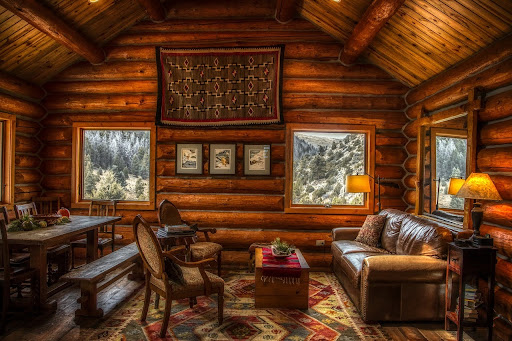
It is a common misconception that log cabins are automatically energy efficient. But the truth is that up to 70% of the heat is lost through the roof and the floor. If the logs are too thin in diameter or if the log cabin is not well built, it will further encourage the heat to escape, hence making it difficult for you to have an energy-efficient log cabin. However, spending more time planning and designing stages and thinking about insulating your log cabin kits in Ontario can make it as energy efficient as possible. So here is a guide for you to achieve proper insulation for your log cabins.
R and U-Value
In order to understand more about energy efficiency for cabin kits in Ontario, you need to be familiar with some important terms. These include:
- R-value: It is the measurement of resistance to heat flow through a certain thickness of material. It is better to have a higher R-value as the more thermal resistance the material has, the better insulator it makes.
- U-value: This measures the heat loss in Watts through a material. The lower the U-value, the better it is since less heat is lost. Since U-values take into account more factors, they are more accurate in determining a material’s insulating ability.
Both of these values are dependent on the type of wood used for the log cabins and the thickness of the logs. However, due to the properties of logs and their ability to store heat, they may not feel as cold as their given R-value since they can release heat back into the house as it cools.
Log Cabin Walls
You need to choose the thickest and best quality logs for your cabin, especially if you live in a cold climate. Ensure that your cabin is well-built with seamless airtight joints to maximise energy efficiency and stop drafts. You can also caulk the walls, which is a flexible sealant used to seal between the logs. Logs expand and contract throughout the year. In winter, they will expand and contract in the summer months.
Considering this, log cabins can vary in height throughout the year quite considerably. This means that fixing the studding and cladding to the walls to add insulation would restrict natural movement, thus resulting in gaps appearing in your walls and eventually making them less energy efficient. Using thick logs will not require you to insulate your walls any further, but some companies do offer wall insulation in the form of a sliding bracket system that does not restrict the log movement.
Floor Insulation
Floor insulation for log cabins can save up to 20% of your annual heating costs, provided it is fitted properly and combined with the finished floor. You may install a moisture-resistant membrane to prevent dampness from rising and for keeping the underneath of the log cabin dry, as it acts to stop water from coming through while allowing water vapour to escape. After the membrane is in place, you can lay thin pieces of wood to raise the log home off the ground. And if your log cabin is already raised off the ground slightly, you still need a moisture-resistant membrane.
Make sure you secure the joists and attach batons to the joists to support the insulation while keeping in mind that you need to leave about a 50mm gap between the membrane and the insulation in order to allow airflow to remove moisture. Once everything is in place, cut the material you are using to insulate to the right size to fit perfectly in the cavities made by the joists.
The simulation should fit snugly to avoid cold spots in teh flooring. Make sure the top of the material sits flush with the top of the joists. The flooring should lie directly on top of it, and the insulation should be at least 50mm deep in order to work efficiently.
Insulating Log Cabin Roof
Log cabins should be coated to the roof rafter level with the roof sheathed with your boards. It is suggested that you use good quality aged boards rather than plywood if you want to add the rustic fleeing of your cabin. Then, cover your roof with moisture-resistant membranes. Staple the membrane down on the boards, as it will stop the warm air from escaping through the layer of insulation.
To encase the insulation, you can add batons to your roof by putting them around the edge of the roof and spaced out evenly along the length of your roof. Then, you can cut the insulation size to fit in between. Also, make sure you leave a small airflow gap.
To Conclude
So make sure you use the right insulating materials like recycled wood fibre, sheep’s wool, or manmade materials like Kingspan and Celotex. You may also consider double glazing in order to maximise energy efficiency. When planning on having a log cabin, do not underestimate the importance of insulation for an energy-efficient log home.